
Commercial Restroom Water Efficiency Benchmarks
A whitepaper-style overview for engineering and architectural specification work, focused on measurable benchmarks, verified references, and practical integration considerations.
Water efficiency in commercial restrooms presents a key area of concern for sustainable design concepts. For commercial, institutional, and high-occupancy buildings, water consumption in restrooms tends to be amongst the top end uses of potable water. Having clear benchmarks allows design professionals and facility owners to measure performance, make comparisons, and support design decisions related to water efficiency and sustainability concepts.
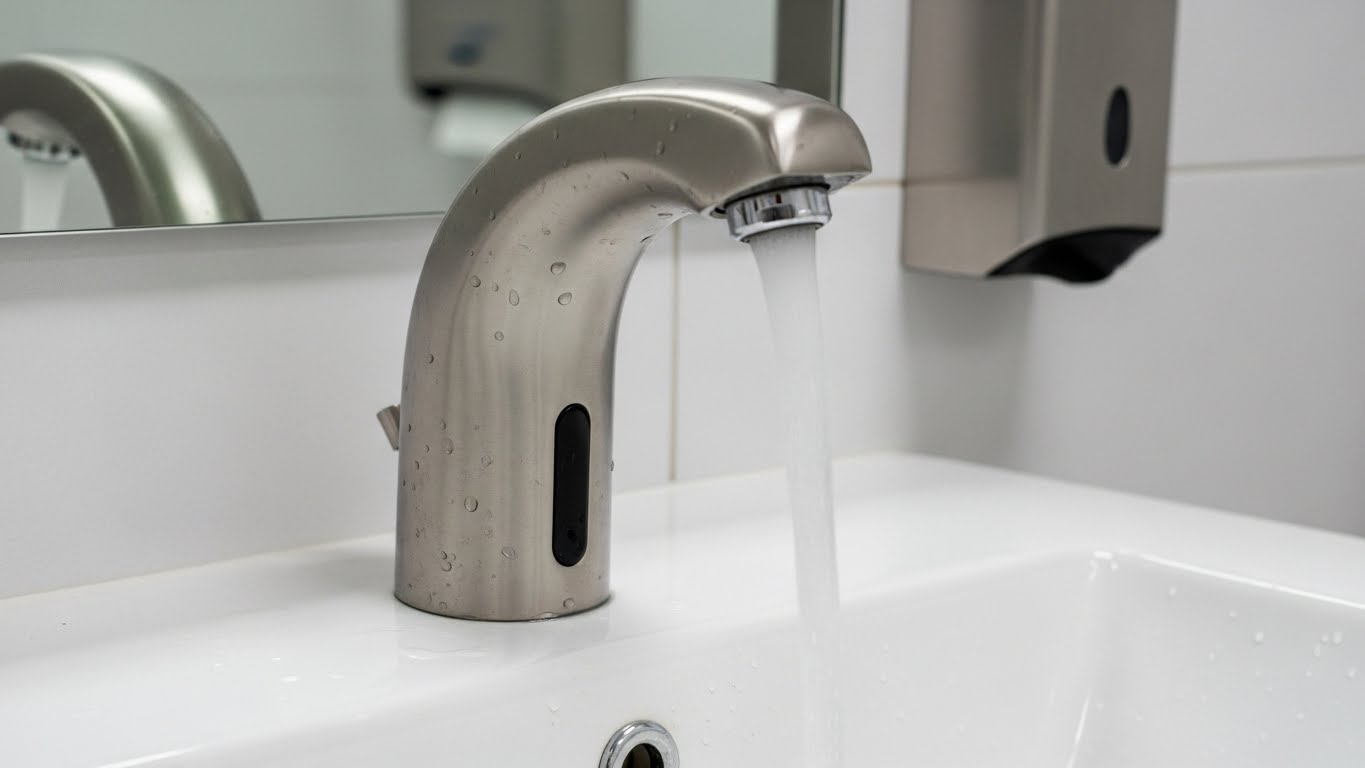
This whitepaper-type article highlights the specifications related to the engineering and architectural applications for efficiency in performance values. References made include the Water-Sense program provided by the U.S. Environmental Protection Agency, ADA Standards for Accessible Design, CALGreen (California Green Building Standards Code), and ASME related standards for pipes/fixtures. Clicks below have been verified for their actual working links.
Water Efficiency in Context: Why Benchmarks Are Important
Building water use, and specifically commercial restroom water use, is a parameter that can be quantified and changed. In most non-residential facilities, restroom fixtures and machinery account for a large portion of indoor water use. According to the U.S. EPA, sanitary fixtures and equipment can use a large portion of water use in a commercial facility, thus offering a huge potential for water conservation and saving.
Benchmarking creates normalized scales to enable designers and facility managers to:
- Compare actual water used to past performance standards of comparable facilities
- Assess decisions for retrofitting or new building designs
- Determine savings in relation to baseline plumbing performance
- Encourage green building credits through LEED or similar rating systems
Benchmarking, according to the EPA, is the measurement of water usage and comparison with previous usage, similar facilities, or levels of best-known performance. This is done using gallons per occupant per day, gallons per flush, or gallons per fixture type. For more information about the process by EPA when considering benchmarking, you can visit: WaterSense Benchmarking Practices
Key Performance Metrics for Commercial Restrooms
Flow and Volume Metrics
Some common benchmarks related to water use in commercial bathrooms may be determined through flow rates in toilets and urinals, as well as in faucets as given below:
Water use benchmarks in commercial bathrooms may include:
- Faucet Flow Rate — Maximum rated flow for lav faucets in commercial plumbing is restricted; for WaterSense certification, no more than 1.5 gallons per minute (GPM) is allowed.
- WaterSense Certified Toilet and Flush Volume for Flushometer-Type Toilets – WaterSense certified flushometer toilets have maximum flush volumes of 1.28 gallons per flush (gpf), a reduction of approximately 20% from the federal standard of 1.6 gpf. To learn more information on WaterSense Certified Toilets, visit EPA WaterSense Toilets
However, it is a function of balancing these benchmarks with requirements for performance from plumbing systems identified in consensus standards like ASME A112.18.1 / CSA B125.1, some of which relate to performance requirements for supply fittings. This is because potential problems, like inadequate rinsing, stressing, or unavailability, may arise if efficiency is pursued at the expense of performance.
System Integration Considerations
Sensor-Operated Fixtures And Controls
Commercial toilets in high-traffic areas are frequently equipped with sensor-controlled faucets and flush valves. While their hydraulic performance is expressed by nominal flow rates or nominal flush volumes, it also involves characteristics of control system timing, such as activation geometry and response times.
Performance measures or benchmarks in such fields would be:
- Response time – time from user presence to actuation of the valve
- Deactivation latentio – dormantio inter valorem shutterريالانتودوات
- Phantom activations refer to the unintended activation of sensors, which tend to increase water use.
Such aspects of control system design are not codified in plumbing regulations but find ever-increasing mentions in design circles to reduce wastage and minimize frustration for users in commercial setups. For further insights on benchmarks regarding sensor accuracy, refer to the link below: Sensor Accuracy Benchmarks
Leak Detection & Monitoring
Active consumption measurement, whether done by the meter or by sub-metering on the restroom branch lines, allows for benchmarking and quick detection of anomalies. Adding leak detection capabilities to the management of water consumption for facilities helps to support sustainability and prevents the degradation of infrastructure over the long term—especially within heavily used restrooms.
Regulatory and Code Frameworks Affecting Benchmarks
WaterSense Best Management Practices
There is an EPA WaterSense at Work Best Management Practices (BMP) guidelines document accessible in the United States, known as “WaterSense at Work Best Management Practices,” offering essential information on commercial building water use and benchmarking. Chapter 2.3 in this guidelines manual defines “benchmarking as part of an overall water management strategy” while setting standards for comparison. To find out more information on the EPA guidelines specific to commercial buildings, visit this webpage link below: WaterSense at Work BMPs
In addition, WaterSense BMPs can be used to help identify retrofit opportunities such as replacing inefficient toilets, faucets, and urinals.
ADA Accessibility Guidelines for Accessible Design
The ADA
There are no measures of water efficiency specified by the ADA Accessible Design Standards, but they play an essential role in integrating plumbing fixtures and accessories into accessible designs. The accessibility guidelines for water closets, lavatories, and the distance from water closets and lavatories to grab bars (and other elements) published by the U.S. Department of Justice specify how designers should provide accessibility without reducing the effectiveness of the potable water systems. Additional information regarding accessibility guidelines under the ADA may be found here: ADA Accessibility Design Standards
The ability to harmonize ADA accessibility standards with effective plumbing systems becomes a key determinant of the success of projects, especially when it comes to the use of sensor operators, control valves, and fixture arrangements.
CALGreen Water Efficiency Requirements
CALGreen, also known as California’s Green Building Standards Code (Title 24, Part 11), sets strict and mandatory water efficiency requirements when it comes to new buildings and building renovations. These cover both prescriptive and performance options on decreasing potable water consumption rates of buildings in excess of minimum flow/flush requirements. CALGreen Tier 1, by way of example only, sets strict requirements on decreasing potable use (e.g., by 12% compared to base), and specification requirements on low-flow fixtures in nonresidential buildings. All CALGreen requirements on water are located at: CALGreen Water Requirements
In areas where CALGreen is applied, water efficiency standards for commercial bathrooms are often equivalent to, or sometimes even follow, CALGreen Tables. This is based on fixed fixture flow rates, and performance requirements that relate to occupancy.
Benchmark Development and Modeling
In quantitative water efficiency, the steps generally encompass:
Determination of Baseline Water Use
This is achieved by utilizing the historic data on the level of use and the corresponding metered rates.
Fixtures Modeling
Use the fixture flow rates and corresponding flush volumes, adjusted for proper assumptions of usage patterns (e.g., peak and off-peak occupancy rates).
Normalizing for Occupancy
Metrics should be reported in gallons per person-days or gallons per fixture cycle to facilitate interfacility comparisons. Creating Setting Benchmarks Determine target levels of performance (for example, reduce by 25% from the baseline) that can be achieved by the identified flow/flush parameters.
Verification & Commissioning
Establish measures of actual performance post-installation to determine that water use is meeting or surpassing the benchmark goals. These steps need to be incorporated through specifications and performance requirements of the construction documents.
Longevity, Supportability, & Long Term Performance
Water efficiency standards are only effective if the fixtures and control systems used to achieve the standards are long-term effective as well. In the context of commercial restrooms, it is important to consider the following:
- Materials selection to accommodate high average daily usage, corrosive cleaning agents, and challenging environmental factors
- Serviceability for sensor calibration, valve cartridges, and internal components without compromising the accessibility features
- Comparing installation costs against future savings in water use and maintenance charges
Such concerns tend to arise in technical specifications where requirements exist with regard to performance limits (e.g. accuracy of ±5% on flow, cycles to failure, and so forth), and where the plans of management entail calibration and maintenance.
Conclusion
Water use efficiency benchmarking for commercial restrooms is an actionable and specification-based process that serves as an important component for sustainable projects and aligns with overall architecture, engineering, and environmental objectives. Understanding and applying defined flow/flush values and addressing challenges and complexities associated with WaterSense, ADA, and CALGreen will allow project professionals to provide an efficient, sustainable, and code-compliant restroom performance. These water efficiency goals, developed through benchmarking, are not fixed entities but need to be responsive to operational needs, user behavior, and space integration planning. For architects and engineers, keeping score using metrics grounded in industry standards and objective performance metrics can be a powerful means of transparent design choices and adopting resource stewardship practices in buildings.
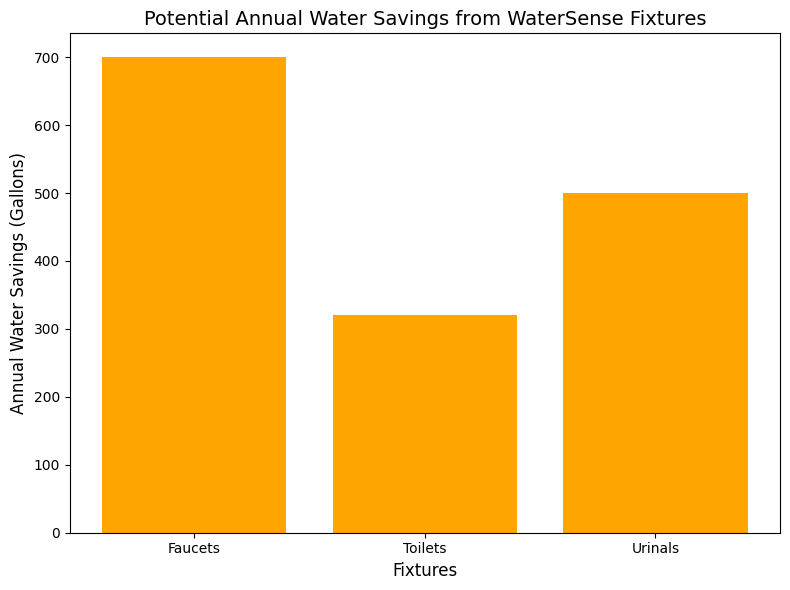
Fixture Benchmark Summary
| Fixture Type | Standard Flow Rate (gpm/gpf) | WaterSense Flow Rate (gpm/gpf) | Efficiency Gain (%) | Service Life (Years) | Maintenance Frequency (Years) |
|---|---|---|---|---|---|
| Faucets | 2.2 | 1.5 | 31.82 | 10 | 2 |
| Toilets | 1.6 | 1.28 | 20.00 | 15 | 3 |
| Urinals | 1.0 | 0.5 | 50.00 | 10 | 3 |
Note: Values are presented as provided.
Verified reference links
EPA WaterSense resources
Additional references

Comments are closed