
Smart Restrooms: Integrated Solutions, Standards, and Lifecycle Strategy for High-Traffic Projects
(accessibility, sustainability, durability, and commissioning considerations for commercial and institutional teams)
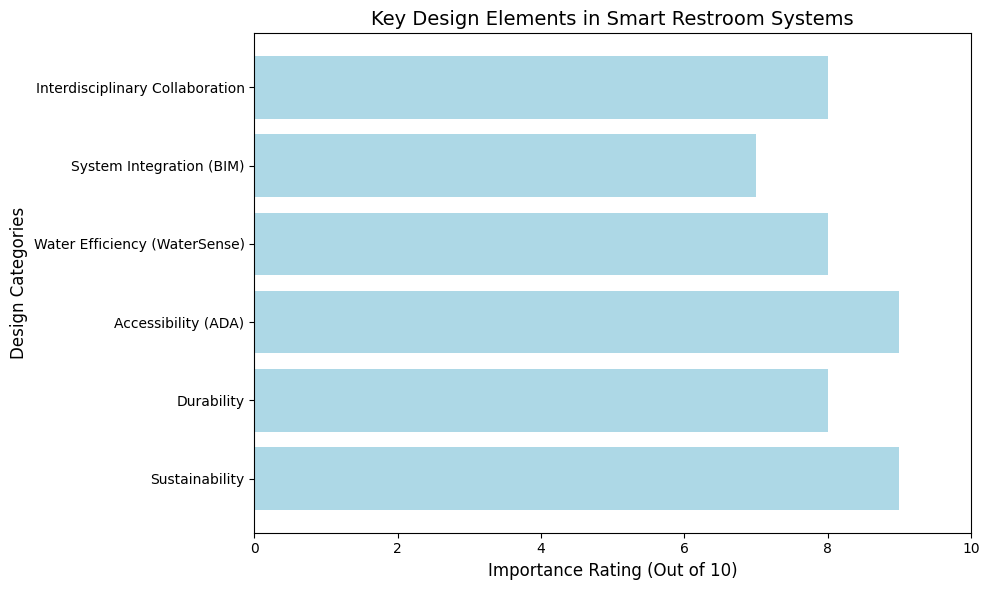
Smart restrooms, prevalent in commercial and institutional settings, have long ceased being a fashionable gadget or gizmo. The overlap or intersection points of technological advancements, the need for sustainability, accessibility standards, and durability requirements make it a complex task. The task is undertaken by having architects, engineers, and product designers come together during the early stages or iterations.
In this white paper, we explore essential design forces, key standards, and ways to combine smart restroom solutions to meet requirements in relationship to accessibility, sustainability, and lifecycle with high-traffic projects.
For more information about Smart Restroom Technology, visit traxinsights.com.
Smart Restrooms: Identifying the Realm of Integrated Solutions
Smart restrooms go beyond the usual functionality of providing water closets and other fixtures with modern finishes. Smart restrooms are systemic environments that consist of an array of subsystems working together in an interconnected way. Some examples of subsystems are those used for tracking occupancy and ambient conditions, smart fixtures with IoT capabilities, data networks and monitoring dashboards, and respective M&E infrastructure. Please visit traxinsights.com for more insights.
From a technical perspective, SMART Toilets integrate:
- Sense/monitoring platforms (occupancy, humidity, air quality, usage counters). More information about these is available online at verteco.com.
- Automatic fixtures (touchless tap, flush, soap dispenser). Additional information: traxinsights.com.
- Control and analysis layers that support remote notification, trend analysis, and interface with Building Management Systems (BMS) functions. See more at dinabina.org.
This introduces radical changes into the way bathrooms are designed, commissioned, and maintained.
ADA Accessibility
The Americans with Disabilities Act (ADA) is still considered the gold standard with regard to restroom accessibility within the USA. Designers need to take into account the dimensions, height, and operational efficiency with regard to dimensions that make it possible for a person with a disability to access the restroom. This impacts the dimensions of a stall, turn space, grab bar positioning, and control/reach range of things like dispensers. To learn more about accessibility, please visit commercialrestroomdesign.com.
ADA compliance cannot be discussed without referencing restroom design. Planning the space and manufacturers of the fixtures work best when done early and before construction, thus preventing costly redesigns.
WaterSense & Efficiency Standards
By EPA WaterSense, performance requirements have been established for water-efficient plumbing fixtures, where a minimum of 30% more water savings than regular fixtures is mandatory without compromising performance. EPA WaterSense labelling helps architects and engineers design fixtures that meet efficiency parameters and advance sustainability needs. See more: commercialtouchlessfaucets.com for more.
The use of WaterSense criteria alongside IoT monitoring allows the facility to report reduced water consumption to meet corporate or institutional sustainability requirements.
CALGreen and Green Building Regulations
The California Green Building Standards Code known as CALGreen takes sustainability beyond the current requirements for land use and transportation and adds requirements for sustainability in the areas of energy use efficiency, water use efficiency and conservation, material conservation, and indoor and outdoor environmental quality. Specifically related to CALGreen is fixture selection and the design of the restroom. More information on CALGreen is found at Wikipedia – CALGreen.
Manufacturers need to supply compliant products as well as performance information to help design teams meet code compliance.
ASME and Engineering Standards
Engineering Standards
Technical specifications of plumbing fixtures are dependent on standards like ASME A112.19.2, among others. Using such standards, one is assured of a number of things, including performance, material, and installation requirements, among others, that allow such fixtures to withstand heavy traffic, resist rust, and have a useful life that is only possible in such facilities as those of an institution.
Companies who qualify their products according to ASME specifications help provide specification certainty to designers. This assists engineers to incorporate performance information into building information modeling and power/utility load analysis.
Resilience in Heavy-Use Settings
Durability is one of the founding principles in smart restroom projects in airports, hospitals, universities, and transportation hubs. It is imperative that the devices are capable of withstanding millions of cycles, and solenoids, sensors, and mechanisms should be expected to last with little maintenance.
-
Design teams and the manufacturers need to assess:
- Performance characteristics under severe cleaning cycles and varying usage levels.
- “Sensor reliability in the presence of changing levels of humidity and particulate matter.”
- Redundancy, too, has a role.
Fixtures and electronics selected with a focus on commercial applications, with proven activation and testing, ensure fewer replacements and greater predictability of operating costs.
To learn more, please visit traxinsights.
Sustainable Integration: Water, Energy, and Waste
The sustainability requirements cover more than mere regulation. Intelligent toilet designs should incorporate:
- Real-Time Water Flow Monitoring for Leak Detection and Load-Based Fixtures Control.
- Energy use in adaptive ventilation systems that are occupancy-related.
- Paper product management based on sensor information to minimize wastage.
- Low power electronic architectures and intelligent lighting control. Go to dinabina.org for more.
Through designing sustainability for the system and not just individual components, the amount of cost savings and reductions of environmental impacts can now be calculated.
Collaborations Across Disciplines: Process and Results
Early Engagement
Successful smart bathroom projects should start by holding workshops involving all possible disciplines to agree upon the following:
- Space limitations and ADA clearances
- Network Infrastructure and Data Needs
- Performance baselines for fixtures
- Upkeep Accessibility and Serviceability
This will bring about a better alignment, thus a better constructability. Also, for further information about the benefits of interdisciplinary team working, please consult the respective sources.
Building Information Modelling & Integrated Documentation
Building Information Modeling (BIM) is an extremely important aspect that allows the coordination of the layout of plumbing fixtures, sensors, power and data conduit routing, and HVAC systems. Companies that provide BIM objects for their products improve design clarity.
Testing & Commissioning
Smart restroom system commissioning proves the physical installation as well as the functionality of the digital networks. The process involves the functionality of the fixtures, the connections to sensors, the thresholds for notifications, and the accuracy of the reporting on the dashboard. Coordination between the commissioning agents and the manufacturers eliminates installation challenges. To learn more about BIM, please refer to verteco.com.
Facilities and Equipment Operational Factors
Intelligent restroom solutions are also able to offer very specific insights in order to facilitate targeted maintenance schedules, labor resource allocation, and consumable supplies management. Sensor and analytical technology data streams are also useful in helping facilities directors move from reactive to predictive maintenance approaches. In high-usage environments, this digital feedback is shown to enhance planning, facilitate sustainability reporting, as well as occupant satisfaction.
Case Studies & Evidence of Value
Many commercial examples prove the effects of smart toilet system applications: IoT sensors enabled facilities to report lower costs associated with cleanliness because of schedules informed by use. Visit traxinsights.com. “Integrations with building management systems have shown enhanced coordination between HVAC systems and reduced energy use related to toilet occupancy patterns.”
Please visit the website www.verteco.com for more information on the topic. These examples demonstrate the efficacy of combining engineering principles with technology in design and spec that directly translates into operational improvements.
Conclusion
Smart Restrooms: Smart Building Systems and Trends
Smart restroom systems incorporate changes taking place in building technologies, green building, and universal design. In designing smart building systems, one would need to work collaboratively with a focus on strict standard adherence, such as ADA, CALGreen, WaterSense, and ASME. Such is not a matter of incorporating more technology in itself for the purpose of incorporating more technology. Rather, effective smart restrooms are a matter of systems engineering to optimize functions, lower the cost of operations, and even increase user satisfaction for buildings which call for reliability and operational understanding.
For more information on smart toilet systems, visit traxinsights.com.
Reference Table
| Topic | Details | Reference Link |
|---|---|---|
| Introduction | Smart restrooms combine technology, sustainability, accessibility, and durability. They require early collaboration between architects, engineers, and product designers. | traxinsights.com |
| Smart Restrooms | Smart restrooms integrate various subsystems like occupancy tracking, smart fixtures, data networks, and M&E infrastructure. | traxinsights.com |
| Smart Toilets Integration | Integrates monitoring platforms, automatic fixtures, and control layers for remote notifications and BMS functions. | verteco.com, traxinsights.com, dinabina.org |
| ADA Accessibility | ADA is the standard for restroom accessibility in the USA, impacting stall dimensions, grab bar positioning, and dispenser reach range. | commercialrestroomdesign.com |
| WaterSense & Efficiency Standards | EPA WaterSense requires fixtures to save 30% more water without compromising performance. IoT monitoring helps meet sustainability goals. | commercialtouchlessfaucets.com |
| CALGreen & Green Building | CALGreen covers sustainability in energy, water use, and materials conservation, with specific requirements for restroom fixtures. | Wikipedia – CALGreen |
| ASME & Engineering Standards | Plumbing fixture standards like ASME A112.19.2 ensure performance, material, and installation requirements. | – |
| Resilience in Heavy-Use Settings | Focus on durability for fixtures and sensors in high-traffic environments like airports and hospitals. | traxinsights.com |
| Sustainable Integration | Smart designs should focus on water flow monitoring, energy-efficient systems, and paper waste reduction. | dinabina.org |
| Collaborations Across Disciplines | Early engagement among disciplines helps identify space limitations, data needs, and fixture baselines for better project alignment. | – |
| Building Information Modeling (BIM) | BIM helps coordinate the layout of plumbing fixtures, sensors, and HVAC systems, improving design clarity. | verteco.com |
| Testing & Commissioning | Commissioning verifies installation and functionality of fixtures, sensors, and data networks for accurate reporting and notifications. | – |
| Facilities Operational Factors | Smart restroom systems facilitate maintenance scheduling, labor allocation, and predictive maintenance. | – |
| Case Studies & Value Evidence | IoT-enabled facilities report lower costs and enhanced coordination between systems like HVAC and toilet occupancy patterns. | traxinsights.com, verteco.com |
| Conclusion | Smart restrooms optimize functions, reduce costs, and improve user satisfaction while adhering to standards like ADA, CALGreen, and WaterSense. | traxinsights.com |
Additional sources (as provided)
facilitiesnet.com
December 3, 2025 — Over 4,000 participants across the U.S., Europe and Asia named restroom cleanliness as their top concern and touch-free fixtures as a primary need. Eighty percent said they would not, or might not, re…
smarterplot.net
August 7, 2025 — Architects bring innovative design ideas, while builders provide practical insights about materials and construction methods. This synergy ensures that the design is not only beautiful but also feasib…
totousa.com
August 7, 2025 — From tools that help architects, interior designers, and home remodeling enthusiasts visualize products in 3D, to intelligent bidet seats and smart toilets that support daily comfort, the smart bathro…
multitech.com
July 24, 2025 — Due to changes in health and hygiene, restroom management has become a top priority for many facility managers across the globe. The restroom market historically added small incremental changes and fe…
wsj.com
July 19, 2025 — When it comes to the prevalence of public toilets, one analysis suggests the U.S. ranks 30th in the world, tied with Botswana. The obvious solution—just build more of them—doesn’t work.
archdaily.com
January 16, 2025 — Transforming how we think about restroom spaces, The Splash Lab reinterprets the restroom experience by incorporating four main principles: inclusivity, innovation, sustainability, and a…
springer.com
December 23, 2024 — This study demonstrates that when Cloud Based Design (CBD) and old CAD data are used for creating an integrative digital model, real cooperation is established between companies using the Cloud Based…
inderscience.com
November 20, 2024 — Through qualitative analysis and literature review, the research investigates collaboration among key stakeholders, defines a structured smart PSS design process, and demonstrates how value co-creatio…
springer.com
October 25, 2024 — The integration of design and fabrication has emerged as a pivotal theme in contemporary architecture, catalyzed by rapid advancements in digital technologies that permeate both design and manufacturi…
architectmagazine.com
April 12, 2024 — This article explores three in-depth case studies collected by Acelab, a platform that connects architects and manufacturers directly for project collaboration.
sciencedirect.com
January 1, 2024 — Collaboration focuses on the software and hardware interfaces to ensure safe and seamless interaction with collaborative robotic solutions. Training, ergonomics tracking, and adaptable interfaces are…
forbes.com
December 5, 2023 — The development of public smart toilets faces various challenges, thus requiring robust solutions. Here is how developers can overcome multiple issues regarding app development for smart…
latechs.com
November 7, 2023 — The collaboration between different creative and technical disciplines is not just beneficial—it is essential. It represents the future of home and commercial space design.
architectmagazine.com
April 6, 2022 — With its latest project for Gallaudet University in Washington, D.C., the New York firm MixDesign creates open-plan restrooms that celebrate the lively diversity of their users. For all their good int…
sciencedirect.com
January 1, 2021 — As such, in this research work, a framework enabling the collaborative design of new products based on the utilization of MR is presented. With the utilization of MR, it is aimed to provide intuitive…
architecturaldigest.com
March 18, 2019 — In recent years, the push for all-gender public restrooms has been making legal headway throughout the U.S. But even people well-versed in the matter may not be familiar with the…
mrcrec.com
Explore how these smart, self-cleaning restrooms from MRC and Urben Blu are revolutionizing public restroom construction and providing safe, clean, and convenient facilities for everyone today.
cambridge.org
Though they can be traced back to different roots, both smart design and smart systems have to do with the recent developments of artificial intelligence.
architizer.com
Here, we take a look at 12 award-winning collaborations that prove that when architects and manufacturers work together throughout the life cycle of a project, truly beautiful things can emerge. Allst…
architizer.com
Can Architects Design a Solution to the Restroom Queuing Problem? Innovative public washrooms from the Tokyo Toilet Project demonstrate how design-based solutions can make these spaces safer and more…
gsparcel.com
Discover how smart restroom fixtures enhance hygiene, efficiency, and sustainability in commercial spaces with integrated solutions by GS Parcel.
figma.com
You don’t build a product without a whole lot of collaboration from engineers, designers, and product

No responses yet