
Supplying Touchless Fixtures for High-Volumes: Battery, Hardwired, or Hybrid
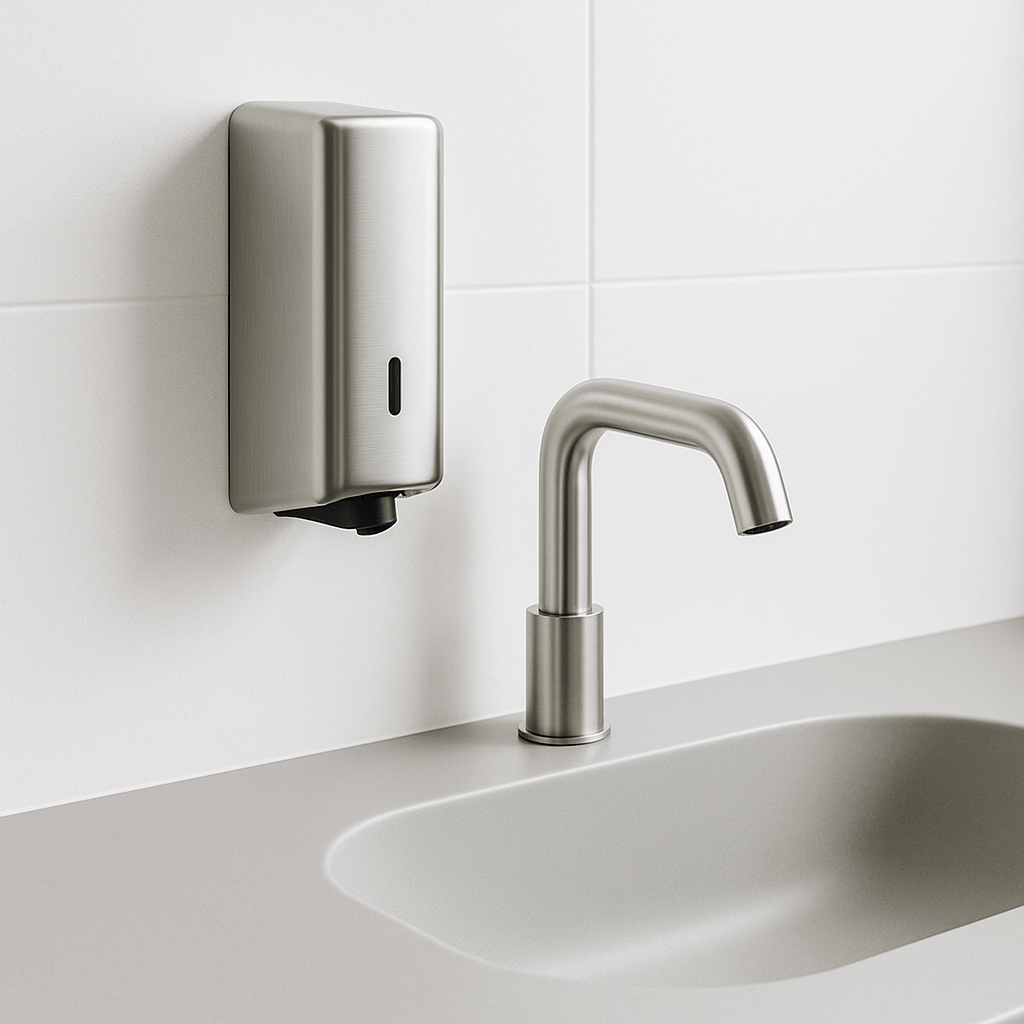
Touchless faucets, dryers, and soap dispensers are stock fittings for high-volume applications such as airports, schools, offices, and hospitals. They add an extra level of hygiene, customer satisfaction, and reduced germ transfer. But behind the sanitary lines and sensor technology is one caveat: powering these fixtures.
Battery, hardwired, and hybrid are not just convenience options. They affect cost of ownership, long-term maintenance, sustainability objectives, and even bathroom reliability. Let’s go through each one, analyze their pros and cons, and summarize where each comes out on top.
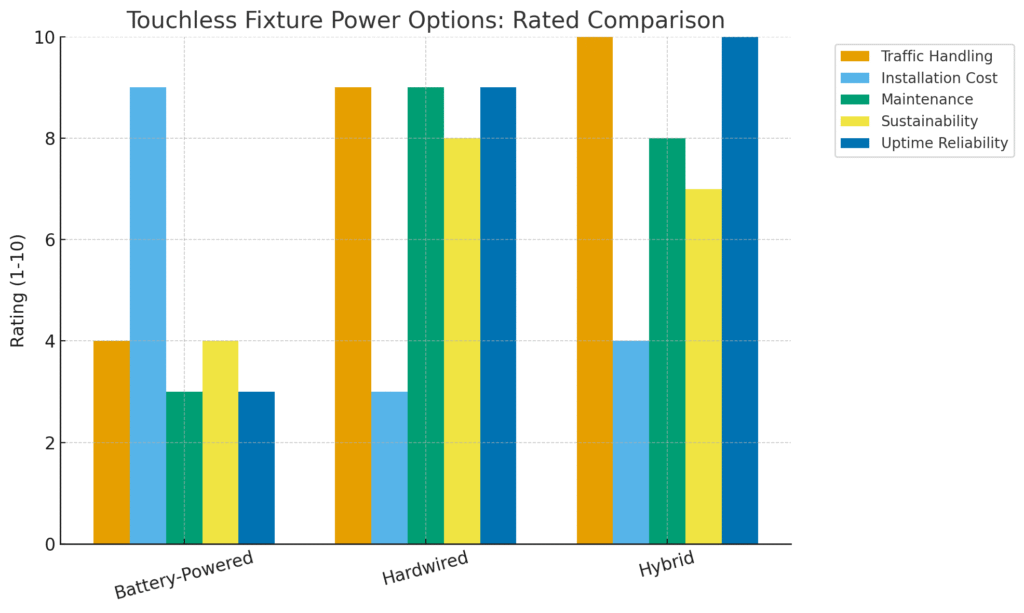
1. Battery-Powered Fixtures
How They Work
Touchless devices battery-operated utilize replaceable or rechargeable batteries—cheap AA/AAA cells, lithium cells, or special battery cartridges utilized most often. Solenoids and sensors draw very little current load when in use, so the batteries will be wasting 1 to 3 years depending upon the load.
Benefit
- Installability: There are no electrical connections, so battery systems are well-suited to retrofit or where run power is costly or impractical.
- Flexibility: Essentially anywhere, as long as supply of the power source is available.
- Lower Upfront Costs: No wiring system, initial installation relatively lower in cost.

Disadvantages
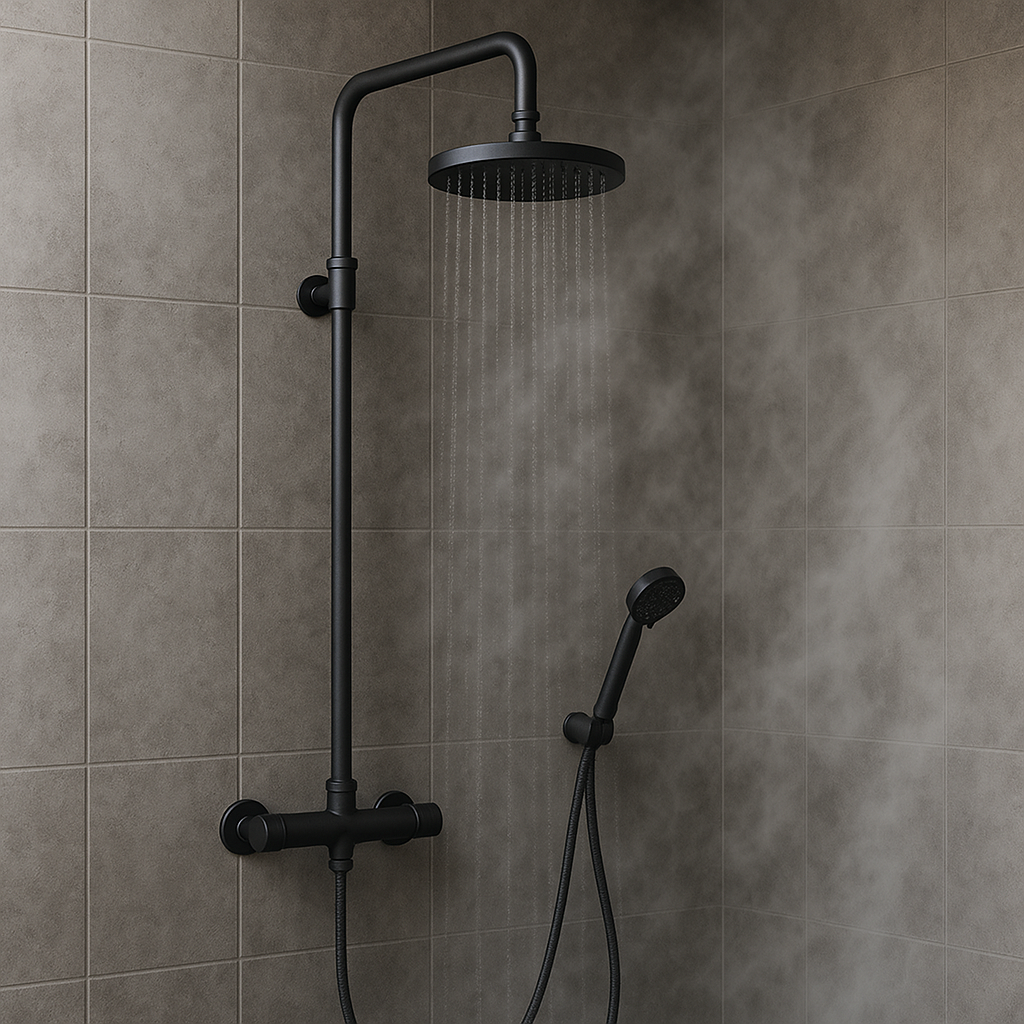
- Maintenance: Batteries must be replaced from time to time, which involves dealing with people. Replacement cycles in high-frequency restrooms might be too labor-intensive and costly.
- Waste & Sustainability: It is not sustainable to dispose of dead batteries unless where recycling process is given top priority in the building.
- Performance Risks: Dropped batteries will result in downtime or spurious performance unless verified from time to time.
Best For: Small buildings, temporary installations, or where electrical wire installation is not convenient.
2. Hardwired Fixtures
How They Work
Hardwired devices are intended to be hardwired into a building power system and take advantage of constant power to secure sensors and valves. Others employ low-voltage transformers within the fixture to control electric current.
Advantages
- Reliability & Consistency: Constant power with zero downtime on the battery. This is essential in stadiums, hospitals, or airports where uptime must be guaranteed.
- Less Maintenance: Zero battery replacements, facility staff saves time and money in the long term.
- Sustainability: Reduces battery disposal, beneficial for green building projects such as LEED.


Limitations
- Higher Upfront Costs: Installation requires electric infrastructure, in most instances electricians, permits, and other building expenses.
- Retrofit Issues: Extremely disturbed current building while retrofitting to hardwired fixtures.
- Grid Power Dependency: Touchless products lost during power failure to building.
Best For: Permanent long-term high-traffic large-scale building where reliability and maintainability must be present.
3. Hybrid Fixtures
How They Operate
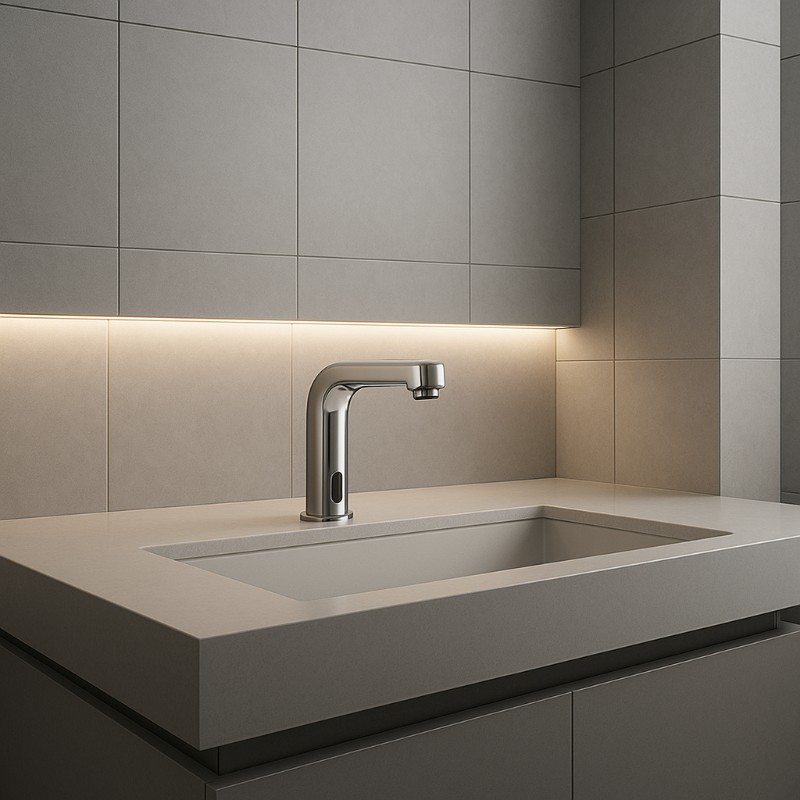
Hybrid products are best of both worlds. Powered by AC (hardwired) standard, but will go to battery when power is lost or electricity is out.
Benefits
- Glitch-Free Service Continuity: People don’t even notice loss of power—fixtures just keep on going, no down time.
- Better Maintenance: Batteries are stand-by only, therefore never drained and will eventually last much longer.
- Future-Proofing: A great solution for those buildings which need to have resiliency as well as reliability.

Disadvantages
- Increased Up-Front Cost: Hybrid fixtures cost more than single-mode fixtures.
- So Hi-Tech Installation: Battery handling and wiring are required, therefore installation is more complicated.
- Fewer Retrofitting Choices: In an older building, it is maybe easier to offer all-hardwired or all-battery choices because of restrictions.
Best Suited For: Mission-critical applications—hospitals, airports, or data centers—where there is bound to be a loss of power.
Key Facility Manager Decision Factors
Hardwired, battery, or hybrid designs are to be chosen by facility managers with the following factors in mind:
- Traffic Level – Hybrid or hardwired systems will function optimally in heavy traffic locations in an attempt to limit frequent battery replacement.
- Facility Age & Infrastructure – Wiring replacements are impossible in older facilities, and therefore battery solutions are more probable.
- Operational Budgets – While batteries are cheaper to buy upfront, hardwired systems pay for themselves in the long run.
- Environmental Goals – Cut. hybrid and hardwired battery waste, achieve green goals.
- Acceptance of Downtime – Where no downtime is tolerable, hybrid is. most reliable.
Applications in Daily Life
- Airports & Transportation Hubs: Thousands daily, no. downtime can be tolerated. Hybrid uses compromise reliability-resilience.
- Schools & Colleges: Retrofits are cheap owing to. battery lights, but new construction testifies hardwired installations reaping benefits in the long term.
- Schools & Colleges: Retrofits are cheap owing to. battery lights, but new construction testifies hardwired installations reaping benefits in the long term.
- Corporate Campuses: Batteries are more appropriate for long-term thinking hardwired installations, but they suffice in mini satellite offices.
Last Words
Touchless fixtures are the emblem of modern, sanitary bathroom design. But their application isn’t cosmetics or sensors—it’s power.
- Battery-powered fixtures are most retrofit flexible and versatile.
- Hardwired systems excel in dependability and longevity.
- Hybrid options introduce resiliency into the picture when uptime is not possible.
These solutions properly should be chosen by facility managers, designers, and architects in consultation with their own project requirements. It is the final solution that not only eases headache-causing operation but also provides users headache-free, clean toilet facilities—be it whatever the environment.
✅ With DesignConcept123, we lead decision-makers through prudent toilet technologies connected to their building. Retirement or retirement from scratch, letting someone else make decisions on power is the beginning of long-term, touchless operation.
| Type | How It Works | Advantages | Disadvantages | Best For |
|---|---|---|---|---|
| Battery-Powered | Runs on replaceable/rechargeable batteries (AA/AAA, lithium, or cartridges). | • Easy to install (no wiring) • Flexible—works anywhere • Lower upfront cost | • Requires periodic battery replacement • Generates waste unless recycling is prioritized • Risk of downtime if batteries deplete | Small buildings, temporary setups, or facilities where wiring isn’t practical |
| Hardwired | Connects directly to building’s electrical system; may use low-voltage transformers. | • Constant reliable power • No battery replacements • Environmentally friendly (no battery waste) | • Higher installation cost (requires electricians, permits) • Retrofitting is disruptive • Fails during power outages | Large, permanent high-traffic facilities (airports, hospitals, stadiums) |
| Hybrid | Primarily AC powered, automatically switches to battery backup during outages. | • No downtime during power loss • Batteries last longer since they’re standby only • Provides resilience and reliability | • Higher upfront cost • More complex installation • Limited retrofit options | Mission-critical sites (airports, hospitals, data centers) |
