In high-end hotels, every part of the guest experience is carefully planned, from the smell of the lobby to the feel of the sheets. The bathroom is one of the most private spaces in many design ideas, but it’s also one of the most ignored. However, more and more, luxury hotels, spas, and fine dining restaurants are turning these private spaces into works of art and style. The modern luxury bathroom is more than just a place to do your business; it’s a work of art where fixtures change into sculptures that engage the senses and add to the brand’s design story.
From Utility to Experience
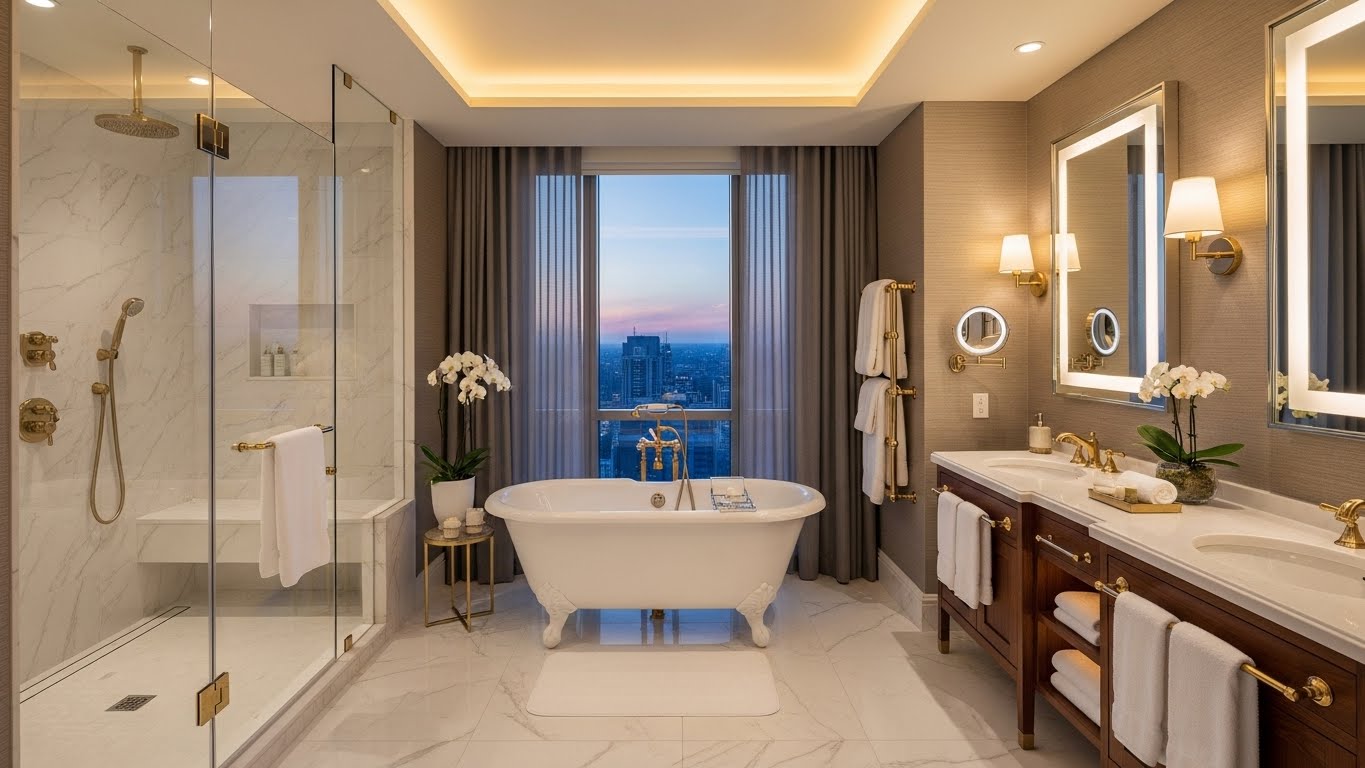
Restrooms used to be an afterthought in design talks, but now they are seen as important parts of how guests feel about luxury. They are quiet parts of a brand’s design philosophy that are personal, immersive, and memorable.
Designers are also experimenting with unconventional materials: polished concrete smooth as silk, coloured gradient glass, and recycled metals that shine in the natural light. Every choice reinforces the aesthetic values of the brand.
This shift toward sculptural design is not about decoration — it’s about emotion. Every fixture becomes part of a visual and tactile story that communicates refinement, calm, and innovation.
The Rise of the Sculptural Fixture
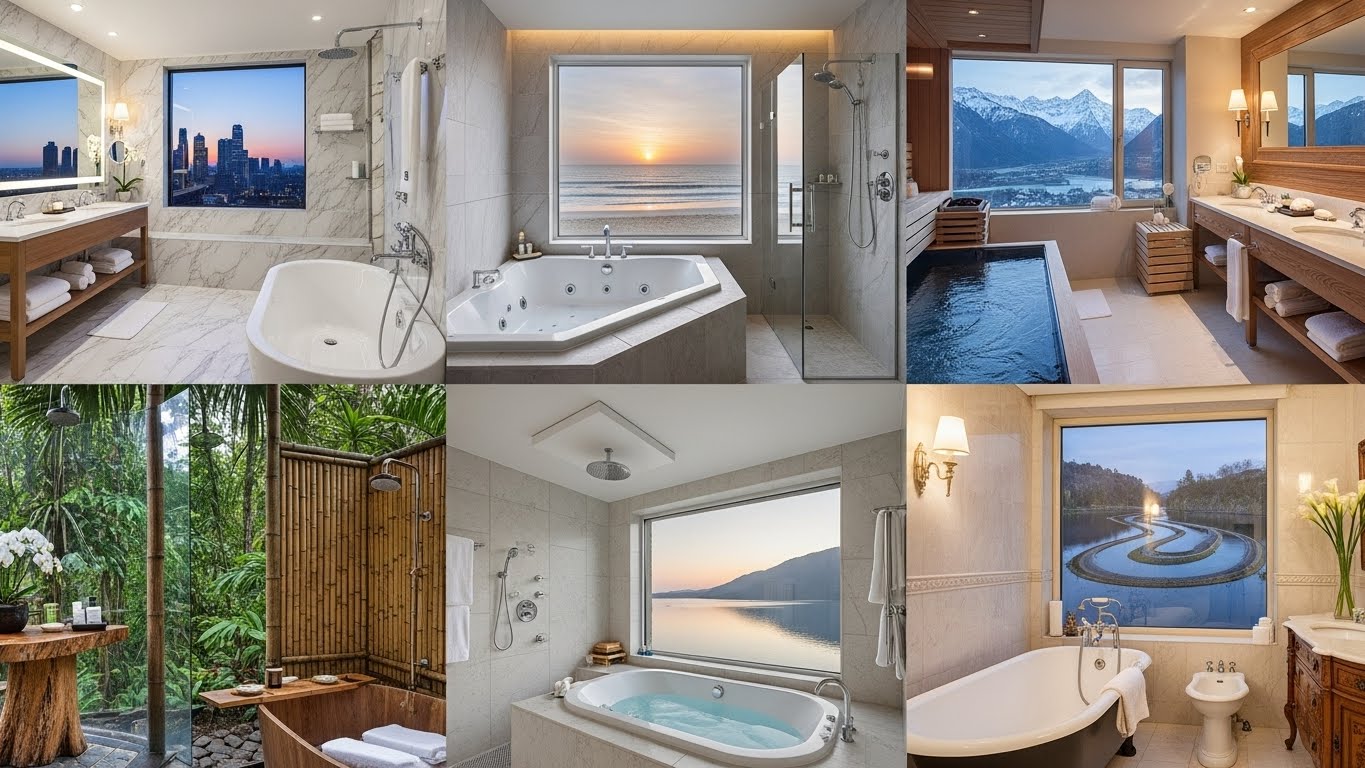
The new luxury restroom design philosophy treats fixtures as focal points — pieces that can anchor a space much like a chandelier might in a grand foyer. Form, proportion, and finish carry as much weight as functionality. A well-designed faucet can capture light like jewelry, turning handwashing into an aesthetic ritual.
Sculptural fixtures also make things surprising. A sleek wall-mounted sensor faucet that responds with a whisper-quiet stream, or a freeform stone sink that looks like it was carved from a single boulder, can make you happy in ways that a regular faucet never could. These touchable things help guests feel emotionally connected to the space, which is an important part of luxury design.
Manufacturers have embraced this shift, offering collections where craftsmanship and technology merge. Brushed gold, matte black, and satin nickel finishes are layered over organic silhouettes, creating a dialogue between texture and form. What was once purely functional has become art you can interact with.
Materiality and Craftsmanship
At the heart of sculptural restroom design lies an obsession with materials. The luxury segment has moved far beyond chrome and porcelain, favoring finishes that express warmth, depth, and artistry.
Stone, marble, and quartz are natural materials that look beautiful forever. Brushed, polished, or aged metal surfaces add style and contrast. And ceramics and composites let you make fluid sculptural shapes that were impossible to make with traditional methods.
Designers are also experimenting with unconventional materials — concrete polished to a silk-like smoothness, glass infused with color gradients, and recycled metals that shimmer under ambient light. Each choice reinforces the brand’s aesthetic ethos.
In hospitality applications, where durability and luxury must coexist,” says the designer, “this material innovation ensures that beauty is not fleeting but persists even after many years of usage. Fabrics are now protected not only from fingerprints and corrosion but even bacteria.
Technology Meets Aesthetics
The integration of intelligent technology has deepened the sculptural evolution of fixtures. Touchless systems, once a hallmark of efficiency, are now designed with an almost ethereal minimalism. Infrared sensors, concealed valves, and integrated temperature controls make these fixtures feel futuristic yet effortless.
This small technical detail lets the visual language of design shine through. Surfaces stay clean and smooth because there are no visible levers or handles. Walls turn into canvases, and fixtures turn into gestures. Smart bathroom systems in high-end hotels now connect directly to building management systems (BMS) to keep track of water use, energy efficiency, and maintenance needs—all while making sure guests have a great experience. The user can’t see the complexity, but the effect is clear: a space that feels elegant, responsive, and easy to clean.
Designing for the Senses
True luxury design considers the full sensory experience. Lighting, acoustics, and even scent play critical roles in shaping emotional impact.
Soft, diffused lighting accentuates the sculptural qualities of fixtures while ensuring functionality. Reflections and shadows bring depth to materials, allowing brushed brass or fluted marble to reveal their subtle textures.
Sound is also made in a certain way. Soft materials and acoustic panels soak up noise that isn’t wanted, making the space peaceful. The flow of water is literally tuned so that the sound of the faucets is soft and cascading, like a spa instead of a machine.
Even fragrance contributes to the ambiance. Custom scent diffusers add to the design palette and help to strengthen the brand’s identity. The whole space becomes immersive, involving not just sight and touch, but also memory and emotion.
The Power of Cohesive Design
Luxury restroom design succeeds when all elements — from the largest tile to the smallest sensor — work in harmony. Architects and interior designers now collaborate closely with fixture manufacturers early in the concept phase to ensure alignment between aesthetic vision and technical requirements.
With custom fabrication, you can create installations that will be absolutely unique and seamless with respect to the building. Floating vanities, hidden drainage, and lighting lines all represent compositions that have been carefully planned. For the hospitality industry, it gives the feeling of being thoughtful and exclusive. Customers feel the sense of every detail being well thought out. The bathroom, which used to be strictly a utilitarian purpose area, now becomes part of the storytelling process, as it’s meant to be admired and not anonymous.
Sustainability in Luxury
Contemporary luxury design incorporates sustainability as an aesthetic challenge, not an accommodation. Green materials, water-saving solutions, and energy-efficient lighting do not have to preclude beauty and sophistication. Low-flow fixtures are designed for performance with no compromise. Recycled materials are being repurposed with flair. Smarter systems monitor and manage use in real-time to save operating expenses while meeting international sustainability objectives.
For discerning travelers, sustainability is increasingly synonymous with luxury. A beautifully designed restroom that also demonstrates ecological awareness enhances brand credibility and emotional resonance.
The Future: Artistic Integration and Personalization
The line between functional fixtures and sculptural installations will keep getting less clear in the future. Restrooms in high-end hotels and restaurants are becoming more like art galleries and sanctuaries.
Technology in digital fabrication will soon make it possible to create tailored sculpture fixtures according to the architectural geometry of the project being undertaken. 3D-printed metallic and ceramic details incorporating sensors will also make it feasible to customize the design in terms of the specific personality of each brand identity.
Personalization will also expand. Imagine mirrors that adjust lighting based on skin tone, or faucets that learn guest preferences for temperature and flow. In luxury hospitality, design will not only serve — it will respond.
Conclusion: When Form Transcends Function
Today’s high-end bathroom is more than just a place to go; it’s an experience. It shows that more and more people think that careful design can make every experience in a hospitality space better.
In the best hospitality settings, design is not only seen but also felt. And that feeling is most personal and revealing of brand identity in the quiet elegance of a well-designed bathroom.
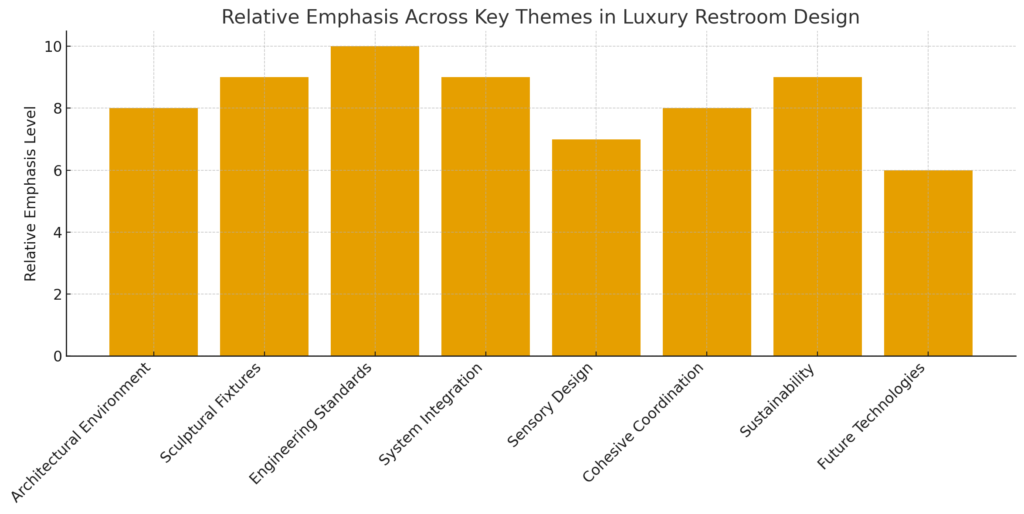
| Theme | What It Covers | Technical Focus / Standards* |
|---|---|---|
| Architectural Role | Restroom as a designed hospitality environment | Spatial planning, lighting, acoustics, local building codes |
| Sculptural Fixtures | Basins, faucets, mirrors as focal elements | CNC/3D fabrication, structural support, ASME A112 series |
| Accessibility & Codes | Inclusive, code-compliant layouts | Clearances, operable parts, ADA 2010 Standards |
| Water & Sustainability | Water and energy performance | EPA WaterSense, CALGreen |
| Systems Integration | Touchless tech and BMS connectivity | Sensors, valves, thermostatic mixing, BMS monitoring, ASHRAE/MEP coordination |
-
 ada.gov
ADA 2010 StandardsAccessibility guidelines for operable parts, clearances, and inclusive restroom design.
ada.gov
ADA 2010 StandardsAccessibility guidelines for operable parts, clearances, and inclusive restroom design. -
epa.gov
EPA WaterSenseWater efficiency criteria and best practices supporting sustainable restroom design.
-
dgs.ca.gov
CALGreenCalifornia Green Building Standards Code influencing materials, water use, and building sustainability.
-
modobath.com
Modo Bath – High-End Bathroom Sinks, Bathroom Vanities and Bathroom …Italian-made, ultimate craftsmanship and design. Modo Bath is focused on providing our customers with a vast selection of bathroom fixtures including luxury bathroom sinks, bathroom vanities, bathroom…
-
modobath.com
Bathroom Inspiration, Ideas & Articles – Modo BathExplore the design secrets of luxury hotel bathrooms and learn how to bring the same elegance, comfort, and spa-like ambiance into your home. Get expert tips on fixtures, lighting, and materials for a…
-
modobath.com
Eco-Luxury Bathroom Innovations: Bridging Sustainability … – Modo BathCombining conservation and design into a bathroom involves integrating sustainable practices and eco-friendly materials seamlessly into the overall aesthetic, ensuring that the space not only looks be…
-
modobath.com
Luxury Bathroom Accessories | Modo BathShop Modo Bath’s luxury bathroom accessories and sets featuring high-end designs crafted to elevate the style, function, and elegance of any premium bathroom.
-
modobath.com
Design Trends – Modo BathBy blending traditional craftsmanship with cutting-edge technology and premium materials, luxury bathroom fixtures offer both enduring functionality and exquisite design, redefining modern luxury.
-
modobath.com
Shopping Guides – modobath.comThe premier online shopping experience for high-end bathroom vanities, bathroom sinks, bathroom accessories, and bathroom hardware.
-
modobath.com
Luxury Bathroom Vanities & Bathroom Furniture | Modo BathBrowse Modo Bath’s luxury bathroom vanities featuring a curated selection of elegant designs, premium finishes, and refined styles for every interior vision.
-
modobath.com
Posts tagged ‘Bathroom Design FAQs’ – modobath.comBy blending traditional craftsmanship with cutting-edge technology and premium materials, luxury bathroom fixtures offer both enduring functionality and exquisite design, redefining modern luxury.
-
modobath.com
About Us – Modo BathThe premier online shopping experience for high-end bathroom vanities, bathroom sinks, bathroom accessories, and bathroom hardware.
-
modobath.com
8 Essentials for Your Dream House | Modo BathSome great fixtures to include in your bathroom include a luxury bathtub, beautiful sink, wall mounted bathroom vanity and a number of other fixtures that will add luxury and comfort into your dream h…
-
modobath.com
Articles Related to Luxury Bathroom Design | Modo BathDesigning a luxury bathroom involves balancing practicality and opulence by selecting high-end materials, innovative fixtures, and thoughtful layouts that cater to both comfort and style.
-
modobath.com
Designing a Luxury Bathroom – Modo BathEverybody deserves their own luxury bathroom, and this guide will give you the tips and guidance on how to do exactly that.
-
modobath.com
Luxury Bathroom Faucets | Modo BathShop Modo Bath’s luxury bathroom faucets available in a wide variety of styles and finishes crafted to deliver elegant design and lasting performance.
-
fontanashowers.com
Future of Luxury Bathroom Fixtures | Smart Bathroom Innovations | AI …Discover the future of luxury and innovation in bathroom fixtures with the latest trends in smart technology and elegant design. From touchless faucets and digital showers to AI-powered toilets and sm…
-
dornbracht.com
Inspiration for Luxury Bathroom Design | DornbrachtGet inspired and transform your bathroom into an exclusive space with our broad range of modern

No responses yet