
Sustainable Building Design • Smart Restrooms
Smart Bathroom Fixtures: Cut Water and Energy Costs in Commercial Buildings
Smart bathroom fixtures can help commercial buildings control water use, reduce unnecessary hot-water demand and improve visibility into restroom performance. Sensor faucets, efficient flush systems and leak-detection strategies can be evaluated together as part of a broader sustainable building design program rather than as isolated fixture upgrades.
How Smart Bathroom Fixtures Reduce Water and Energy Demand
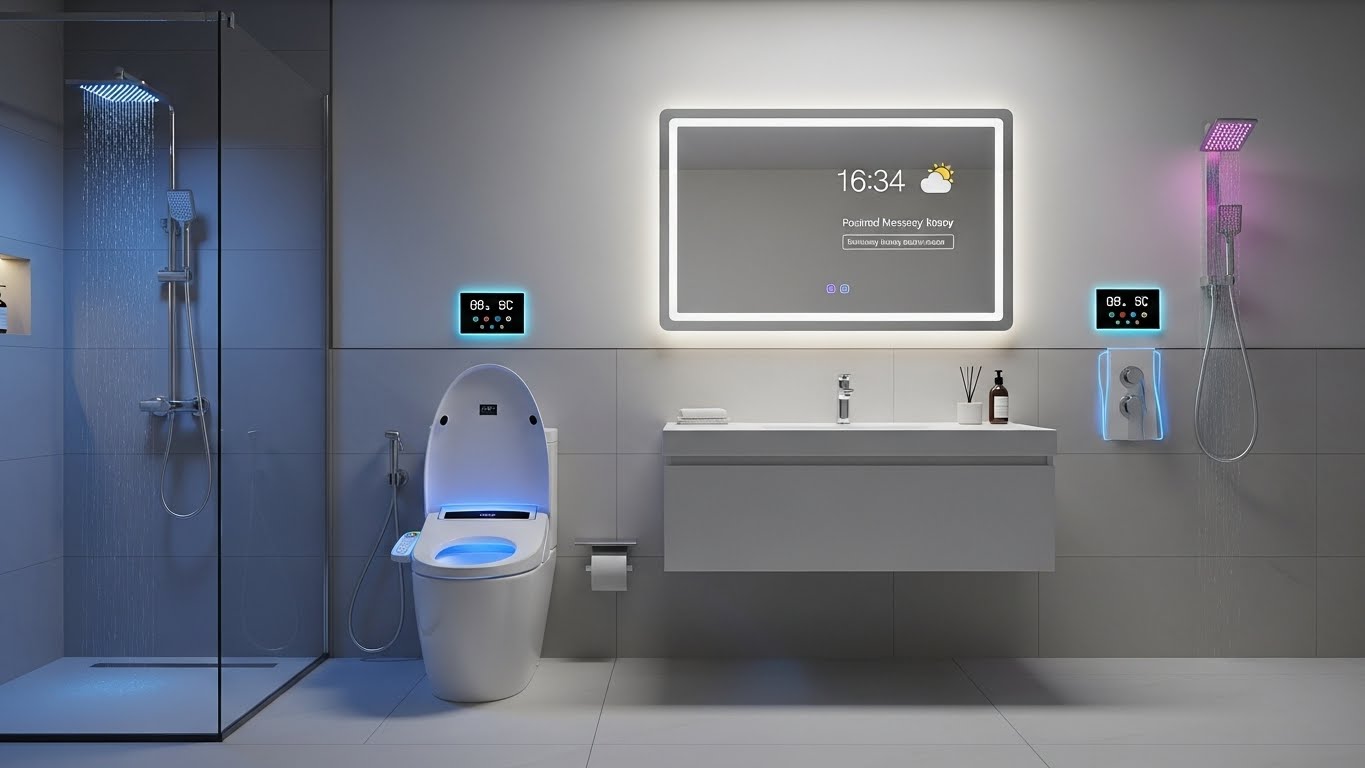
Smart bathroom fixtures are intended to control when and how water is delivered. Sensor-activated faucets, metered controls, efficient flush systems and leak-detection devices can reduce unnecessary run time and give facility teams more control over restroom water use.
Hot-water reduction can also affect energy demand because water that is not discharged does not need to be heated and circulated. For commercial restrooms, the design opportunity therefore includes both fixture-level water efficiency and the building systems that support domestic hot water.
Controlled Run Time
Automatic shutoff limits unnecessary faucet operation between handwashing tasks.
Reduced Flow
Appropriate commercial faucet flow rates can reduce total fixture consumption.
Leak Visibility
Monitoring can help facility teams identify unexpected water use or leaks earlier.
Hot-Water Demand
Reducing warm-water discharge can also reduce associated heating demand.
Smart Bathroom Fixture Case Studies and Reported Savings
The supplied article summarizes several 2023–2025 examples involving public facilities, lodging properties, resorts and large-building leak-detection programs. These examples illustrate the types of performance outcomes facility teams may evaluate when planning restroom upgrades.
Project-specific savings should be established from the actual fixture schedule, baseline consumption, occupancy, water pressure, domestic hot-water configuration and commissioning data.
City Facilities: Reported 35% Restroom Water Reduction
The source article describes a large city Department of Public Works upgrading multiple restrooms with high-efficiency fixtures, including dual-flush valves and hybrid urinals. According to that case-study summary, six flagship buildings recorded an average 35% reduction in water use after a three-month performance study.
Design takeaways
- Conduct a building-by-building audit before selecting the retrofit package.
- Identify high flushing volume and unusually long faucet run times.
- Standardize fixture settings where repeatable consumption is important.
- Combine efficient fixtures with automatic shutoff and controlled timing.
Hospitality Restrooms: Touchless Faucet Water-Saving Strategy
The supplied article reports 30–40% average water reductions in hospitality examples after conversion to touchless faucets. The described savings were associated with controlled run times and elimination of taps being left running between user tasks.
The article also notes that reducing warm-water flow can reduce the energy associated with water heating and recirculation. It references commercial lavatory flow rates within the 0.5–1.0 gpm range as part of this efficiency strategy.
Power and maintenance
Battery replacement can become an operational issue in large sensor-fixture installations. Where supported by the selected fixture, self-powered or energy-harvesting systems may reduce routine battery replacement. Product-specific power characteristics should be verified before specification.
Resorts: Turning Efficient Restroom Fixtures Into a Visible Sustainability Strategy
The source article describes resorts using sensor-based faucets and flush systems not only as operational equipment but also as visible elements of their sustainability programs.
Controlled run times and repeatable fixture operation can support water-management objectives during high occupancy and cleaning periods. Where an owner intends to communicate savings publicly, however, the project should establish a documented baseline and post-installation measurement process.
IoT Leak Detection and Hidden Building Water Losses
Smart restroom planning can extend beyond faucets and flush valves. Connected leak sensors can be located beneath sinks, in plumbing chases and near other vulnerable water-system components so maintenance teams can receive alerts when abnormal moisture or leakage is detected.
The supplied article discusses campus and hospitality examples from 2024–2025 where early detection was associated with avoided water loss and finish damage. It also notes that leakage from hot-water systems can create both water and energy consequences.
Facility integration
Where supported by the selected leak-detection system, alerts can be coordinated with a building management system or maintenance dashboard. The project team should confirm the actual communication protocol, network requirements and alert workflow rather than assuming universal BMS compatibility.
- Identify critical leak-detection locations during design.
- Coordinate sensor power and communications.
- Establish who receives alarms and how they are escalated.
- Provide accessible locations for sensor inspection and replacement.
What the Reported Water and Energy Numbers Mean for Real Projects
The supplied article summarizes the following ranges as conservative projections or reported outcomes for certain installations. They should be treated as project-specific reference points rather than guaranteed savings for every building.
Actual performance will depend on baseline consumption, fixture use patterns, occupancy, flow rates, hot-water distribution, recirculation, local utility rates and maintenance practices.
Smart Bathroom Fixture Specification Checklist
The original article identifies several priorities for smart restroom upgrades. For professional specifications, these can be translated into the following coordinated checklist.
Evaluate commercial lavatory flow together with the basin, pressure, user task and applicable plumbing or water-efficiency requirements.
Verify the flush volume and performance requirements for the actual fixture type rather than selecting equipment solely by nominal water use.
Confirm battery, hardwired or self-powered configurations supported by the selected sensor equipment.
Coordinate sensor placement, notification pathways, service access and any supported building-system connection.
Record available water-use data, fixture quantities, operating patterns and relevant occupancy information so post-installation results can be compared meaningfully.
Test activation zones, automatic shutoff, flow, pressure and false triggering under completed restroom conditions.
Identify valves, controllers, batteries, transformers, strainers and other service components before counters and walls are closed.
Common Smart Restroom Upgrade Pitfalls
-
Relying only on flow restriction.
Lower nominal flow does not address excessive manual run time by itself. -
Ignoring basin performance.
Faucet flow and outlet geometry need to work with the actual basin without creating excessive splash. -
Overlooking battery maintenance.
Large sensor installations require a clear battery or power-management strategy. -
Assuming all fixtures are connected.
BMS or IoT functions should only be specified when supported by the selected equipment. -
Ignoring hidden leaks.
Leaks in concealed water systems may continue before becoming visible at finished surfaces. -
Skipping commissioning.
Sensor fixtures should be tested after final basins, lighting, pressure conditions and finishes are in place.
Smart Bathroom Fixtures Within Sustainable Building Design
Water-efficient restroom strategies can form part of broader sustainable building programs. Projects pursuing LEED, WELL or other building-performance frameworks should evaluate each program’s current requirements rather than assuming that installing a particular smart fixture automatically earns certification credit.
The larger value for architects and engineers is measurability. Fixture schedules can establish flow and control requirements, commissioning can verify operation, and facility teams can compare consumption before and after upgrades where suitable metering data is available.
This turns restroom sustainability from a general design intention into a performance topic that can be incorporated into plumbing specifications, operations planning and future capital improvement decisions.
Smart Restroom Design Visual References
Smart Bathroom Fixture Planning Summary
| System | Primary Function | Potential Efficiency Benefit | Specification / Coordination Focus |
|---|---|---|---|
| Sensor Faucet | Automatic activation and shutoff. | Limits unnecessary faucet run time. | Flow, detection zone, basin, power and service access. |
| Metered Faucet | Delivers water for a controlled operating period. | Supports repeatable run-time control. | Timing, flow, user task and maintenance. |
| Efficient Flush System | Controls water delivered per flush event. | Can reduce fixture water consumption where properly selected. | Fixture compatibility, flush performance and applicable code requirements. |
| Leak Detection | Detects abnormal moisture or water conditions. | Can reduce the duration of undetected leaks. | Placement, communication, alarm workflow and serviceability. |
| Self-Powered Sensor | Uses product-specific energy-harvesting technology where available. | May reduce battery replacement requirements. | Verify manufacturer-supported configuration and operating conditions. |
| Building Monitoring | Collects available operational or water-use data. | Can support baseline comparison and troubleshooting. | Metering architecture, supported protocols and facility workflow. |
The Bottom Line for Smart Bathroom Fixture Upgrades
The 2023–2025 examples summarized in the supplied article show why commercial restrooms are useful targets for water-efficiency upgrades: fixture use is frequent, operating behavior can be controlled, and results can be measured where appropriate baseline data exists.
For owners, the potential benefit includes lower resource consumption and more predictable fixture operation. For architects and engineers, smart restroom systems offer a practical way to translate sustainable building goals into flow rates, automatic controls, commissioning requirements and measurable operating criteria.
The strongest project approach is to begin with actual building data, specify equipment according to verified product capabilities and applicable requirements, commission the completed installation and compare post-upgrade performance against the original baseline.
Smart Bathroom Fixture and Sustainable Building Resources
These reference resources support water-efficiency, green-building and occupant-performance research relevant to commercial restroom planning.
Smart Restrooms as a Measurable Sustainability Strategy
Commercial restrooms are practical locations for sustainability improvements because fixture operation can be specified, controlled and evaluated. Smart faucets, efficient flushing equipment and leak-detection systems each address different parts of building water use.
Their effectiveness ultimately depends on project-specific conditions. Flow rates, run times, water pressure, occupancy, hot-water distribution, electrical infrastructure and maintenance practices all influence the final result.
By treating smart bathroom fixtures as coordinated building systems rather than isolated products, AEC and facility teams can establish clearer performance criteria, more maintainable installations and more defensible water- and energy-efficiency goals.