
A specifier-focused overview of accessibility, water efficiency, durability, and building systems integration.
There is a paradigm shift when it comes to the design and implementation of restroom environments specific to commercial and institutional projects. Restrooms were once servicing spaces, but now, with the changing focus of technology integration, sustainable performance, and universal accessibility, these areas are where these three aspects come together. For designers, engineers, and specifiers, there is a shift coming from emerging standards and designs that are changing the way restroom systems are designed, specified, and delivered.
ADA Accessibility Guidelines for Design
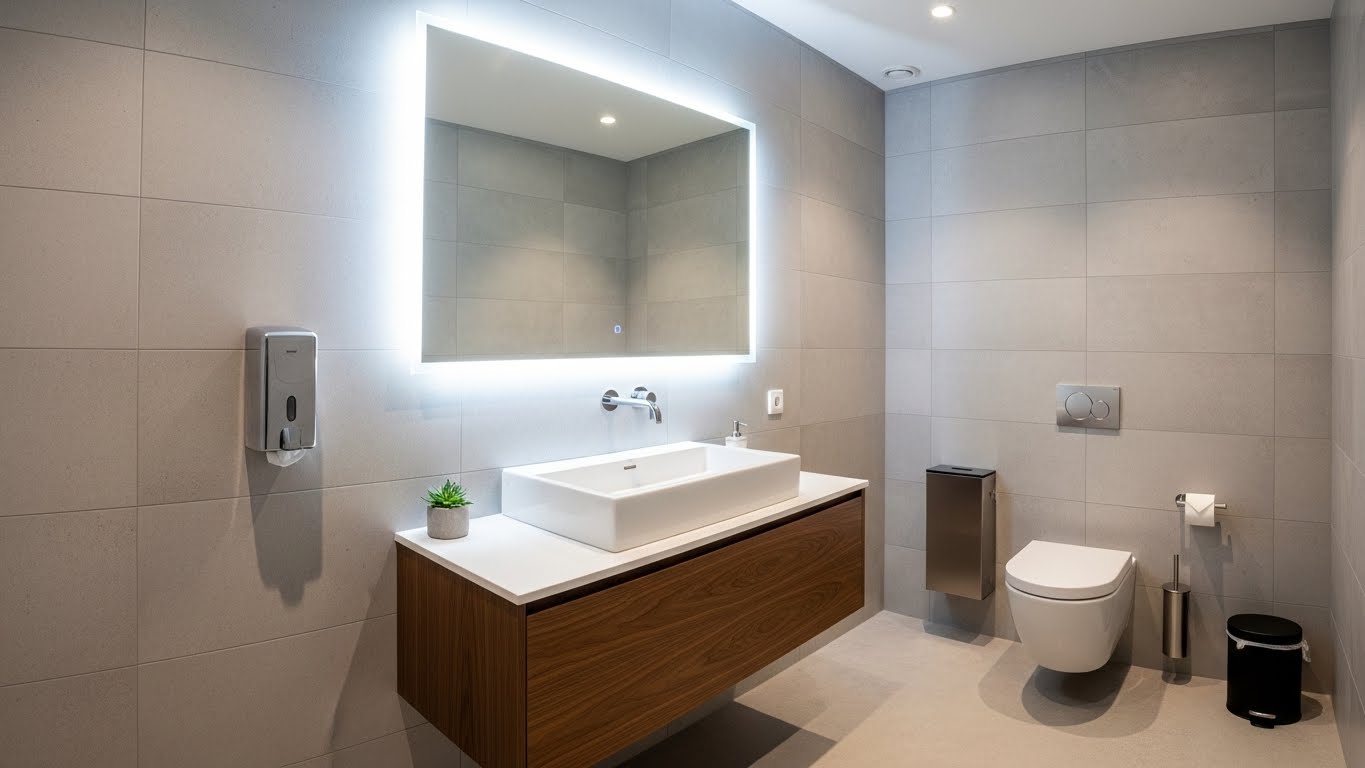
The Americans with Disabilities Act-ADA Standards for Accessible Design provides minimum requirements regarding the accessibility of facilities. These ADA Standards apply to new construction and to significant alteration, and cover spatial clearances, reach ranges, fixation heights of fixtures, signage, and maneuverability standards of what restroom facilities must be included to be considered accessible. Full technical requirements concerning the layout of toilet compartments, floor spaces, and so on are detailed in chapter six of the ADA Standards.
The accessibility standards for restrooms are both a matter of law and an important consideration from an ethical-design perspective. It is also important to review the process to determine that the designers review specific dimensional and functional requirements from the latest ADA publications and that certain requirements are upgraded or local codes offered through ICC A117.1.
Water Efficiency: EPA WaterSense
The EPA WaterSense program provides a voluntary but important performance spec for water-efficient plumbing fixtures. Toilets, faucets, urinals, and other fixtures certified with the WaterSense label meet strict standards of performance and efficiency developed using the consensus standard method of taking into consideration customer satisfaction and the reduction of water use.
Though not made mandatory by building regulations, use of WaterSense products in institutional and commercial bathrooms is conducive to conservation of water resources and helps in cutting down costs in the long run.
Design professionals should refer to the EPA WaterSense list to select low-flow products in order to remain consistent with EPA’s WaterSense standard for certifications.
CALGreen and Regional Environmental Codes
Since California leads, CALGreen is one of the most progressive standards in the preparation of applied sustainability standards. The CALGreen provisions are not restricted to water conservation but material preservation and environmental quality standards, thereby making water-use reduction strategy requirements in commercial and publicly used restrooms mandatory.
In those regions where CALGreen or other environmental building codes are prevalent, it is necessary that washroom design teams integrate the use of documented water budgets and efficiency goals relatively early in the process of design development, as passing a certain threshold of compliance is necessary at that stage of permitting.
ASME Standards for Plumbing Fixtures: ASME
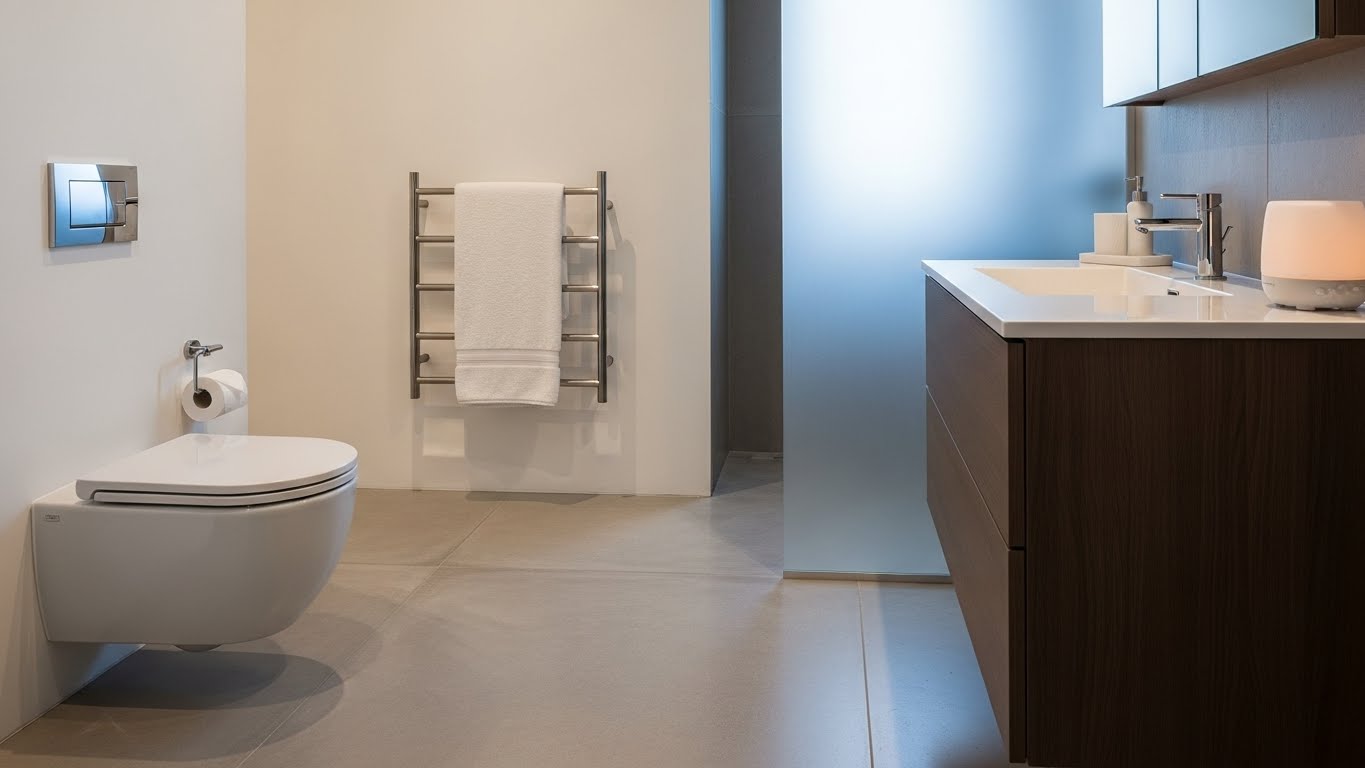
Another notable is the American Society of Mechanical Engineers (ASME), whose guidelines cover the materials, testing, performance, and safety specifications for the fixture in the bathroom. Perhaps the most notable is ASME A112.19.2 / CSA B45.1. This speaks to the needs for toilets, lavatories, urinals, and institutional uses.
“Other consensus documents published by the ASME include ASME A112.18.1, which addresses supply fittings like faucets and sets the minimum requirements with respect to their mechanical endurance and the safety of the water.” Source:
Including ASME standards in specifications is useful in making sure that the chosen products work in high commercial usage environments with consistent results.
Durability and Long Life of a System
Fixture Type and Material Selection
Starting with the quality of plumbing fixtures and finishes, the durability of such plumbing systems in airports, hospitals, and learning institutions can be met with the use of wall sinks with heavy-duty carriers, which provide accessibility to the sink at the same time.
Material and construction: The choice of material, such as manufactured vitreous china with heavy glaze, Type 304 stainless steel carriers, and anti-corrosion hardware, has a significant effect on long-term costs. Specifications solely based on architectural requirements tend to lead to early failures and life-cycle costs.
Integration with Mechanical, Electrical, and Controls Systems
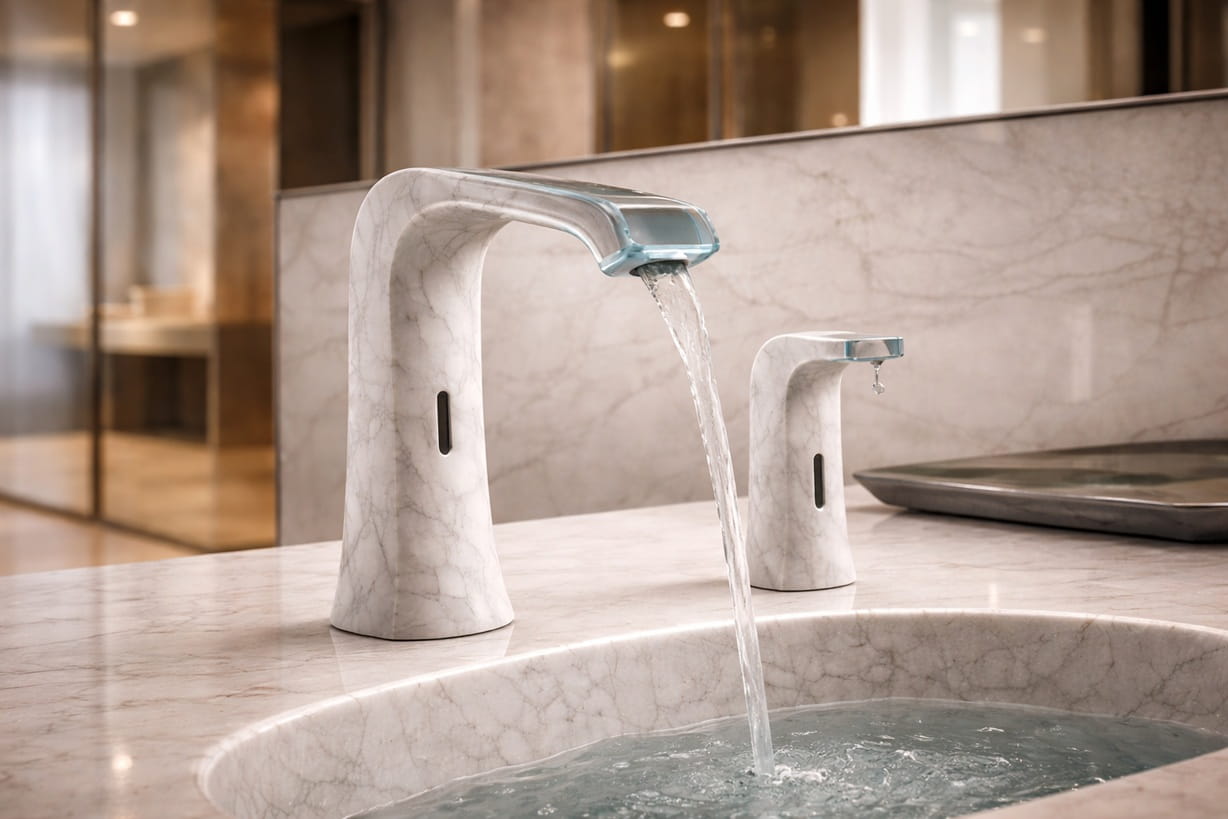
System integration design is paramount for optimal performance, especially in restrooms. Touchless systems, such as faucets, are ideal examples, where installation demands the integration of plumbing, power, and control. Motion-sensor faucets, for example, are ideal for increasing personal and environmental hygiene, especially where the data can be integrated into the facility management system.
Fixture control wiring, sensors, power redundancy, and access panels should be planned by the design team in the earlier stages of the design phase.
Sustainability and Environmental Concerns
Strategies of Water Conservation
Restroom facilities also contribute substantially to water consumption in commercial buildings. Specifying high-performance plumbing fixtures beyond minimum regulatory standards will result in enormous reductions in demand without having to compromise performance. WaterSense provides designers guidance toward low-flow faucets, valve efficiency, and optimizing fixtures to save water without degrading performance.
These include dual flush toilets, high-efficiency urinals, and other water-saving technologies that help to conserve water while providing occupancy comfort and use.
Waste Reduction and Material Cycles
Sustainable Bathroom Design takes into consideration the life cycle effect of materials used in constructing bathrooms. The use of materials with long lifecycles, which are recycled and easy to maintain, helps decrease the carbon footprint of an organization’s facilities. In addition, those updateable components such as sensor modules and aerators extend the lifespan of bathroom fixtures and prevent waste.
Accessibility Beyond Compliance
ADA and ICC A117.1 guidelines for accessibility just scrape the surface of progressive restroom designs, which take into account more users with universal design. Even more universal design strategies, such as zero threshold access, accessible floor space, intuitive room configuration, and tactile signage, can be used in progressive restroom designs.
“Thinking beyond minimum compliance helps generate design outcomes that address the needs of older persons, persons with temporary disabilities, and persons caring for others.”
Technology Integration and Smarter Buildings
Sensor Networks & Usage Analytics
Now, restrooms are able to be networked for sensors monitoring and tracking fixture use, occupancy, and resource use. This data is useful and supportive of both predictive maintenance and minimizing downtime and cleaning schedules. Inclusion as part of larger building management systems advances and promotes enhanced efficiency and supports accountability for energy and water resource use.
Internet of Things and Automated Controls
Building systems are incorporating more of the Internet of Things technology to further enhance and optimize restroom functions. Automated control and adjustment of lighting and temperature during times of low demand makes allowance for comfort and safety considerations of peak demand times.
Conclusion
The future of commercial and institutional restroom facilities is at crossroads concerning code requirements, technology application, resource stewardship and sustainability, and accessibility. In making and maintaining safe and functional facilities, AEC professionals are asked to move forward and advance from minimum coding requirements and considerations toward more comprehensive and inclusive system-level perspectives and approaches. In so doing, multidisciplinary design approaches incorporating ADA, WaterSense, CALGreen, and ASME standards and considerations at their systems-level approach will deliver restrooms offering enhanced long-term performances and contributions toward environmental mitigation and occupant comfort and safety enhancement.
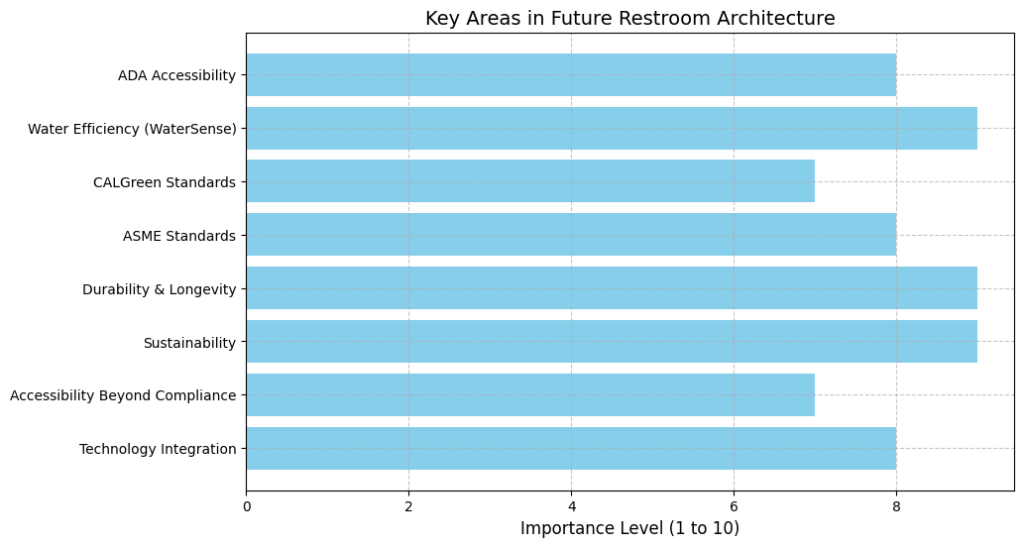
Key Areas and Importance Levels
| Key Area | Importance Level (1 to 10) | Description |
|---|---|---|
| ADA Accessibility | 8 | Establishes guidelines for spatial clearances, reach ranges, and fixture mounting heights for accessibility. |
| Water Efficiency (WaterSense) | 9 | EPA-certified products for water conservation and performance efficiency in restroom fixtures. |
| CALGreen Standards | 7 | California state code for water use reduction, material conservation, and green building standards. |
| ASME Standards | 8 | Standards for plumbing fixtures to ensure mechanical durability, safety, and performance. |
| Durability & Longevity | 9 | Focus on selecting durable materials and fixtures for long-term performance in high-use environments. |
| Sustainability | 9 | Incorporating water conservation, waste reduction, and material life cycle impacts into designs. |
| Accessibility Beyond Compliance | 7 | Advancing accessibility with universal design principles for a wider range of users. |
| Technology Integration | 8 | Integration of sensor networks, IoT, and automated controls for optimal restroom performance. |
Note: Importance levels are presented as provided.