
AEC Restroom Planning
Accessible and Inclusive Restroom Design: ADA and Universal Design Fixture Guidelines
Accessible commercial and institutional restroom design requires more than selecting code-compliant fixtures. Architects, plumbing engineers, interior designers, contractors, and facility teams must coordinate circulation, clear floor space, reach ranges, controls, basin geometry, accessories, power, service access, water efficiency, cleanability, and long-term maintenance. The strongest restroom plans treat accessibility and Universal Design as part of one coordinated building system rather than as a final compliance check.
Accessible Restroom Design Standards and Core U.S. References
Within the United States, the 2010 ADA Standards for Accessible Design establish enforceable minimum requirements related to accessible routes, plumbing fixtures, operable parts, reach ranges, clear floor space, toilet rooms, bathing rooms, and other building elements. Restroom fixture selection should therefore be coordinated with the dimensional requirements of the entire room rather than treated as an isolated product decision.
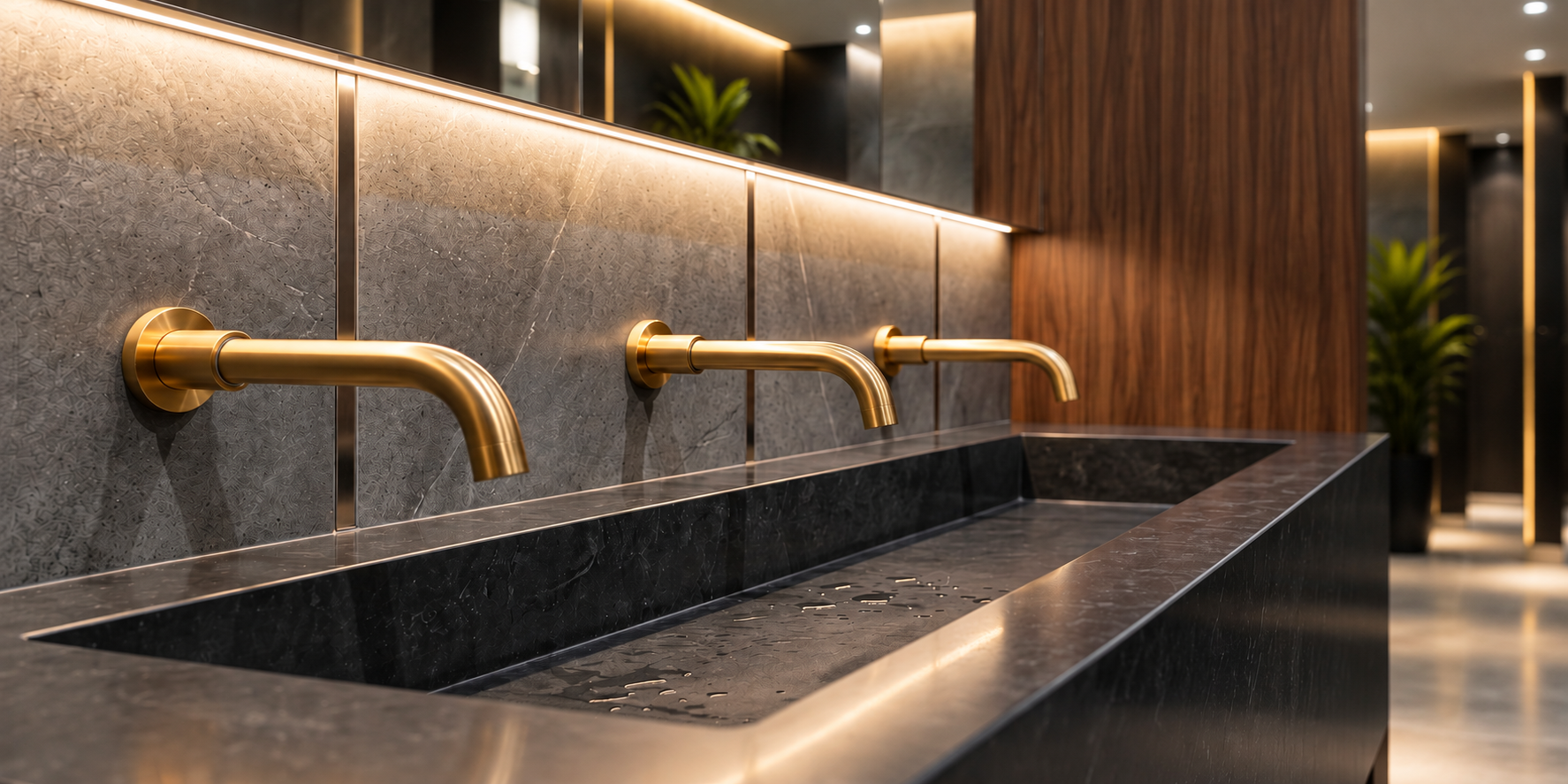
Projects may also reference ICC A117.1 through state or local building-code adoption. The applicable code edition and local amendments should be confirmed for each project because jurisdictional requirements can vary.
ADA Compliance and Universal Design in Commercial Restrooms
ADA requirements establish minimum accessibility criteria, while Universal Design considers how environments can support a broader range of users without requiring special adaptation. In restroom planning, this can influence how architects approach fixture visibility, intuitive operation, circulation, reach, signage, contrast, lighting, physical effort, and tolerance for user error.
Universal Design does not replace code. Instead, it can help project teams move beyond minimum dimensional compliance toward a restroom that is easier to understand and use by people with different levels of mobility, dexterity, strength, vision, age, stature, and familiarity with the building.
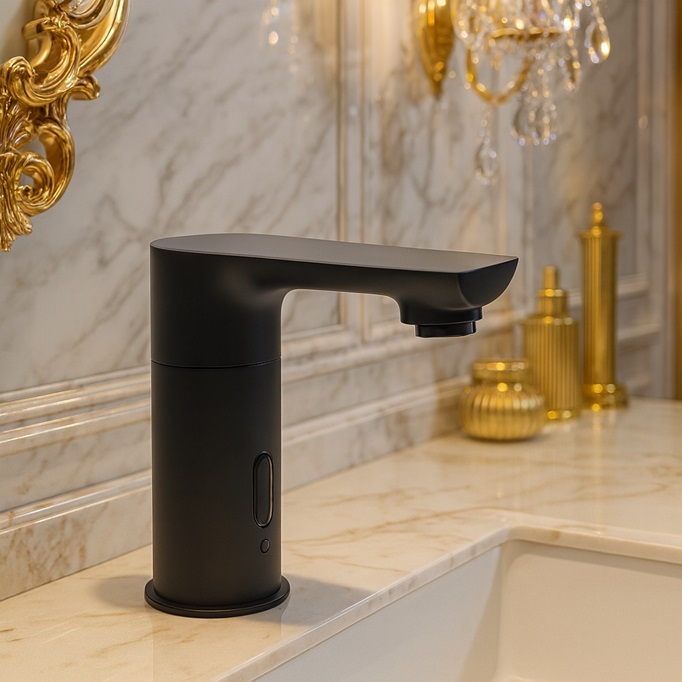

A practical specification approach is to use applicable accessibility standards as the minimum compliance framework and then evaluate whether Universal Design principles can reduce unnecessary operating effort, improve clarity, and support a wider range of occupants.
Planning Accessible Restrooms Around Clearances and Circulation
Start with usable space before selecting fixtures
Accessible restroom design should begin with circulation, clear floor space, maneuvering requirements, door movement, approach zones, and reach ranges. Fixtures and accessories should then be coordinated within that usable envelope. Starting with the visual fixture layout and checking accessibility later can create conflicts that require expensive revisions during construction.
Door swings, partitions, trash receptacles, changing stations, plumbing access panels and projecting accessories can all affect the usable floor area. The architectural plan, plumbing plan, interior elevations and accessory schedule should therefore be reviewed together.
Common coordination problems include accessories installed beyond usable reach, waste bins placed inside required floor space, door swings interfering with fixture access, and rough-in locations that force the finished fixture away from the intended dimensional relationship. Accessory placement should be documented as a design dimension rather than left for field interpretation.
Water Closets, Flush Controls and Supportive Facilities
Water closet selection should consider accessibility, structural support, cleaning, plumbing rough-in, service access, user operation and durability. Wall-hung configurations can simplify floor cleaning in some commercial environments, but they also require coordinated carriers, structural conditions, finished-wall dimensions and accessible service provisions.
Flush controls should remain usable by occupants with limited hand strength or dexterity. Where electronic flush controls are used, the sensing field, manual override, battery or electrical source, valve access and commissioning process should be included in the specification.
Operability
Review control position, operating method and accessibility from the intended approach.
Structural Coordination
Confirm carriers, backing, anchorage and finished-wall relationships before construction.
Service Access
Keep valves, controls and replaceable components reachable without destructive demolition.
In high-use environments, durability should also address cycle frequency, vandal resistance, chemical exposure, fastener security and repeatable maintenance. A fixture that meets dimensional requirements but is difficult to service can create accessibility problems later when equipment remains out of operation for extended periods.
Accessible Lavatory, Faucet and Basin Coordination
The lavatory zone is one of the most coordination-intensive parts of an accessible restroom because the faucet, basin, counter, drain, water supplies, protective covers, soap dispenser, mirror, backsplash and user approach all occupy the same limited area. A faucet should not be selected independently from the basin geometry.
Architects and plumbing engineers should evaluate spout reach, outlet position and water-stream angle relative to the basin. The water stream should land within a useful handwashing area without requiring the user to overreach or causing excessive splash onto the counter. Deep setbacks and oversized counters may create an attractive elevation while making fixtures unnecessarily difficult to reach.
Below the counter, the design team should coordinate piping, traps, mixing equipment, solenoid valves, control boxes, power supplies and other equipment so required user clearance is not compromised. Where protection from hot or sharp plumbing components is required, the protection system should be shown in the final detail rather than added after installation.
Sensor Faucets and Touch-Free Operability
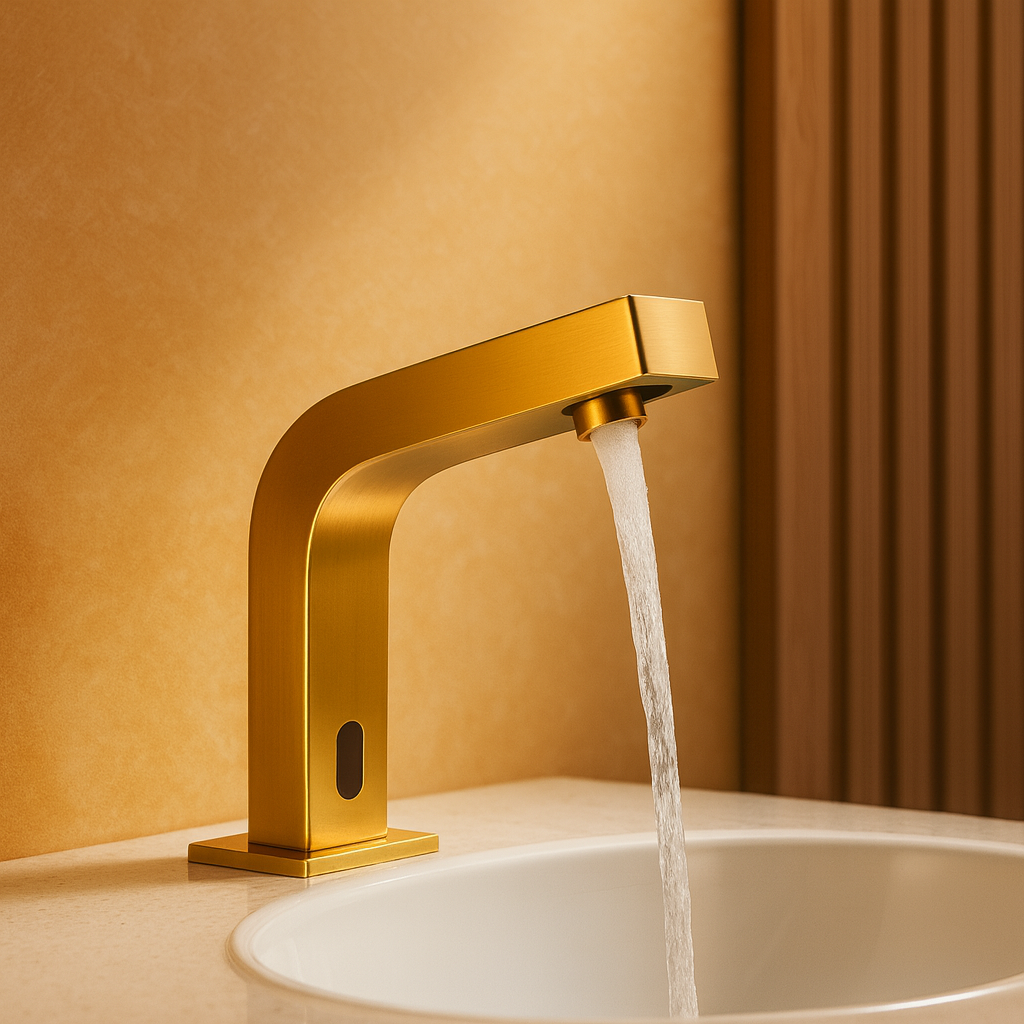
Sensor-operated faucets can reduce the physical effort associated with grasping, twisting or pushing a manual control. This can support users with reduced dexterity; however, automatic operation should not be treated as an accessibility solution by itself. The faucet still needs to be reachable, positioned correctly over the basin and commissioned to detect hands within the natural use zone.
Sensor behavior should be checked under the completed restroom conditions. Basin finish, backsplash reflectivity, lighting, adjacent fixtures and the mounting relationship can affect detection behavior depending on the sensing technology. A mockup is particularly useful when a large number of identical wash stations will be installed.

For multi-station restrooms, consistency is important. Users should encounter approximately the same activation relationship from one basin to the next. Standardizing mounting conditions, sensor orientation, flow controls and power arrangements can also make commissioning and maintenance more predictable for facility teams.
Water Efficiency and Sustainability Without Performance Compromise
WaterSense as a performance reference
WaterSense-labeled plumbing products provide a recognized pathway for evaluating water efficiency together with performance requirements established by the U.S. Environmental Protection Agency. The appropriate product specification should be confirmed for the fixture category being evaluated.
For tank-type toilets within the applicable WaterSense specification, the maximum effective flush volume is 1.28 gallons per flush. Project teams should verify the current WaterSense specification, applicable plumbing code, manufacturer data and intended use before selecting a fixture.

Reduced fixture flow should also be evaluated at the plumbing-system level. Engineers should coordinate expected fixture use with water supply, drainage, venting, hot-water strategy, drainline conditions and commissioning rather than assuming that a lower nominal flow rate automatically produces better overall building performance.
CALGreen and jurisdictional overlays
California projects, and projects voluntarily adopting comparable water-efficiency objectives, may need to coordinate CALGreen requirements with fixture schedules and plumbing calculations. Applicable mandatory measures should be confirmed against the project type, code edition and authority having jurisdiction.
Materials, Plumbing Standards and Commercial Durability
Using recognized plumbing standards
Referencing recognized plumbing standards helps establish measurable expectations for component construction, performance testing and marking. ASME A112.18.1/CSA B125.1 is commonly referenced for plumbing supply fittings, while standards applicable to plumbing fixtures should be coordinated according to the specific product category.
Surface selection and cleanability
Commercial restroom surfaces may be exposed to frequent cleaning, disinfectants, moisture, abrasion and continuous user contact. Specifications should therefore address cleanability and material compatibility alongside visual finish. Smooth transitions, appropriately selected nonporous surfaces, protected fasteners and serviceable construction can help reduce maintenance difficulty.
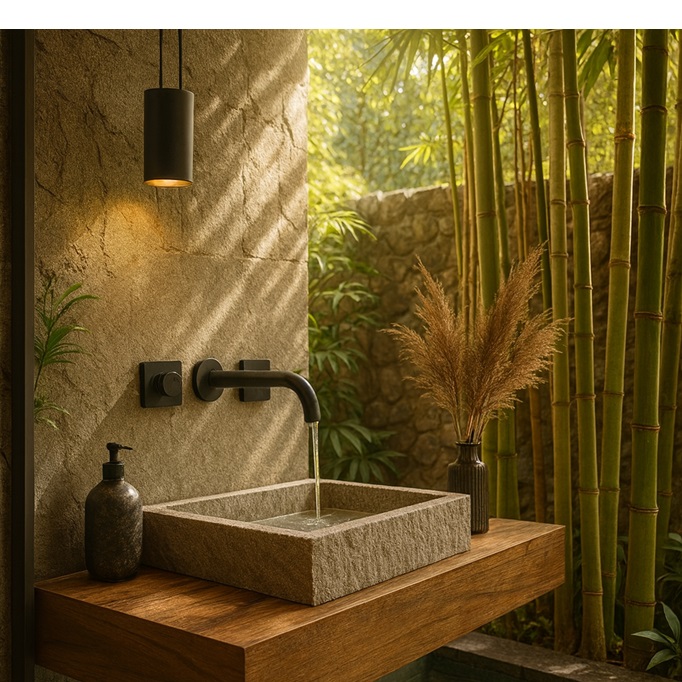
For high-use restrooms, project teams may also consider anti-rotation details, concealed or tamper-resistant fasteners, robust mounting methods and replaceable wear components. These requirements are especially important when fixtures will be subjected to frequent use, public access or intensive cleaning.
Controls, Soap Dispensers, Drying Systems and Accessories
Faucets, soap dispensers, hand dryers and towel systems should be coordinated around the same user position. Automatic equipment can reduce manual operating effort, while manually operated components should be evaluated against applicable reach and operability requirements.
Soap dispensers are frequently installed after the counter and mirror arrangement is already established. This can result in a dispenser being too far from the natural handwashing position, conflicting with a mirror, or reducing usable counter space. The dispenser should instead appear on the same coordinated interior elevation as the faucet, basin, mirror and drying equipment.
Accessory coordination
Mirrors, shelves, hooks, sanitary-product dispensers, waste receptacles, changing stations and other wall-mounted accessories can create accessibility conflicts when their mounting heights, projections and approach requirements are not coordinated. Interior elevations should document these conditions instead of relying solely on generic accessory schedules.
Hand dryers and towel dispensers should also be reviewed for protrusion, circulation and clear-floor-space conflicts. In healthcare, educational and other sensitive environments, acoustic output may also be relevant to user comfort and should be considered during equipment selection.
Lighting, Visual Contrast, Wayfinding and User Understanding
Inclusive restroom design also depends on how easily occupants can interpret the room. Lighting should support safe movement, fixture recognition, mirror use and the visibility of controls without producing excessive glare. Highly reflective counters, mirrors and polished fittings can create confusing visual conditions when lighting is poorly coordinated.
Appropriate visual contrast can help occupants distinguish floors from walls, identify doors, locate controls and understand changes in plane. This does not require every surface to use a dramatically different color. Instead, architects can consider contrast intentionally at functional locations where users need to identify an edge, opening, fixture or control.

Wayfinding should be understandable before the user enters the room. Signage, entrance geometry and circulation should communicate the restroom location and available facilities clearly. Within larger public restrooms, fixture banks, accessible compartments, washing areas and exits should remain visually understandable without requiring users to navigate around unnecessary obstacles.
Accessible Shower and Bathing-Area Coordination
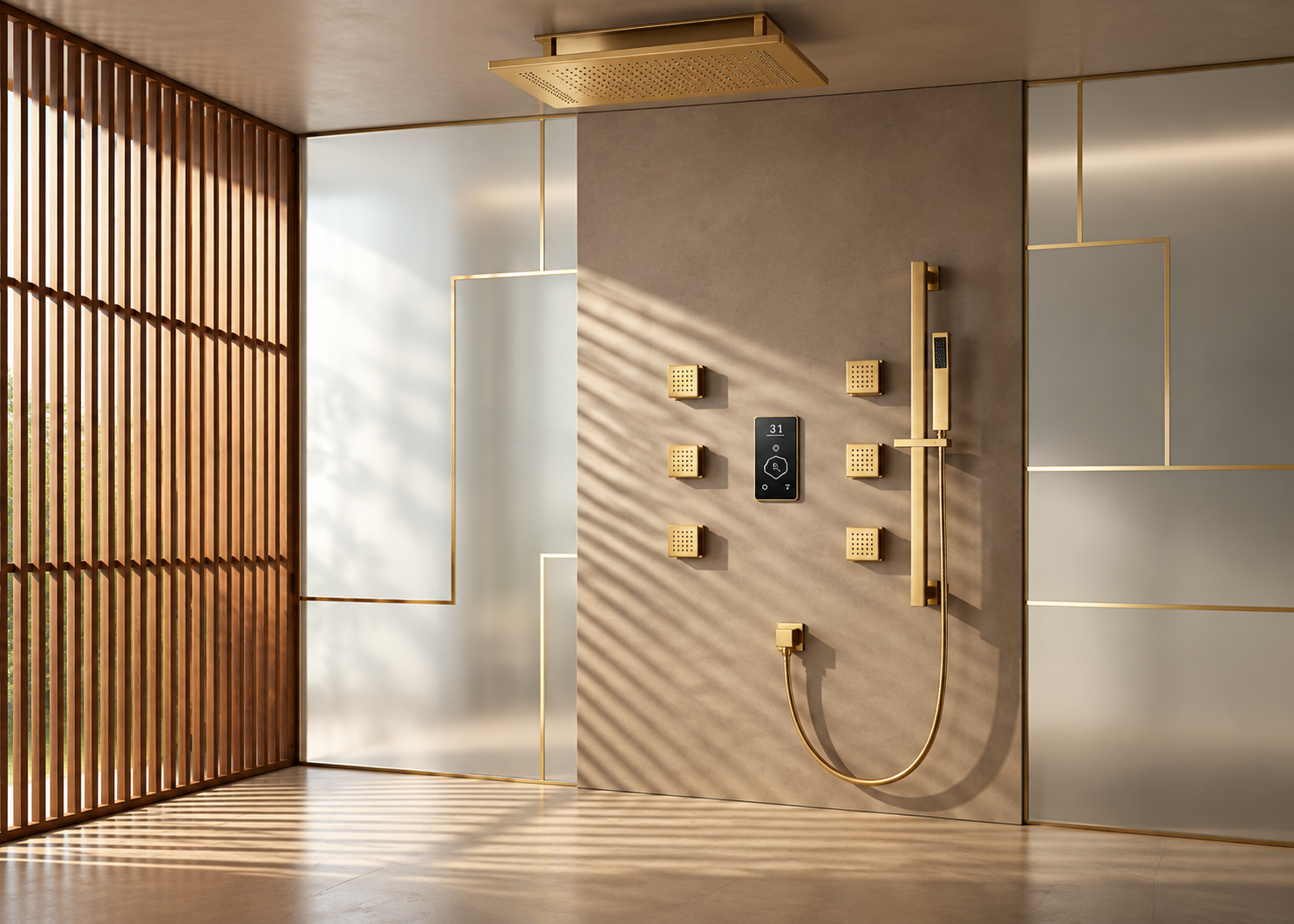
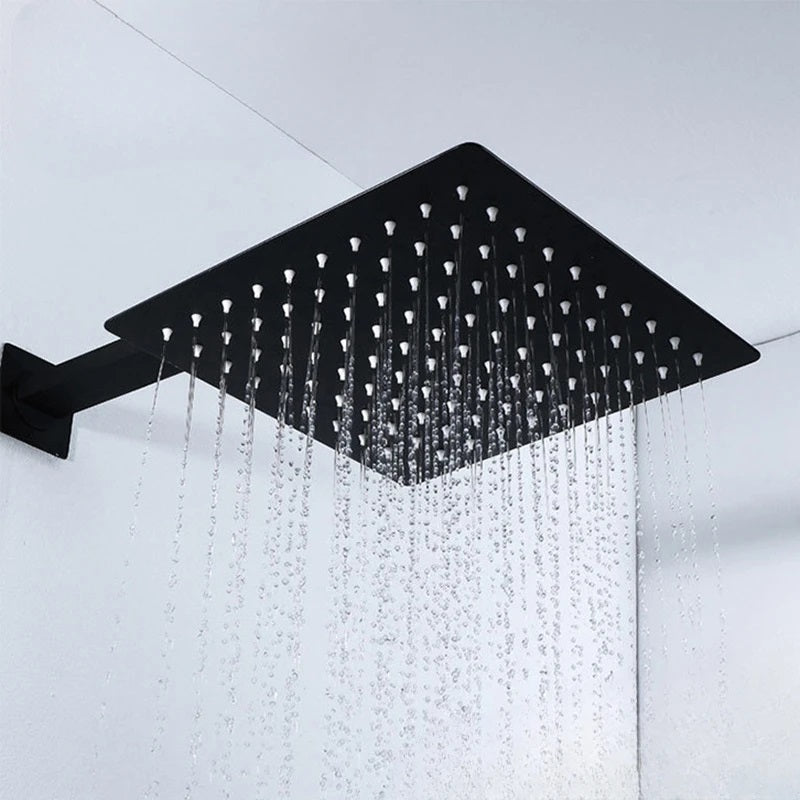
Where a project includes showers or bathing facilities, accessibility coordination extends beyond the toilet and lavatory room. Shower size, entry condition, controls, spray units, grab bars, seating, thresholds, drainage, floor slope and accessory placement should be reviewed together according to the applicable shower type and accessibility standard.
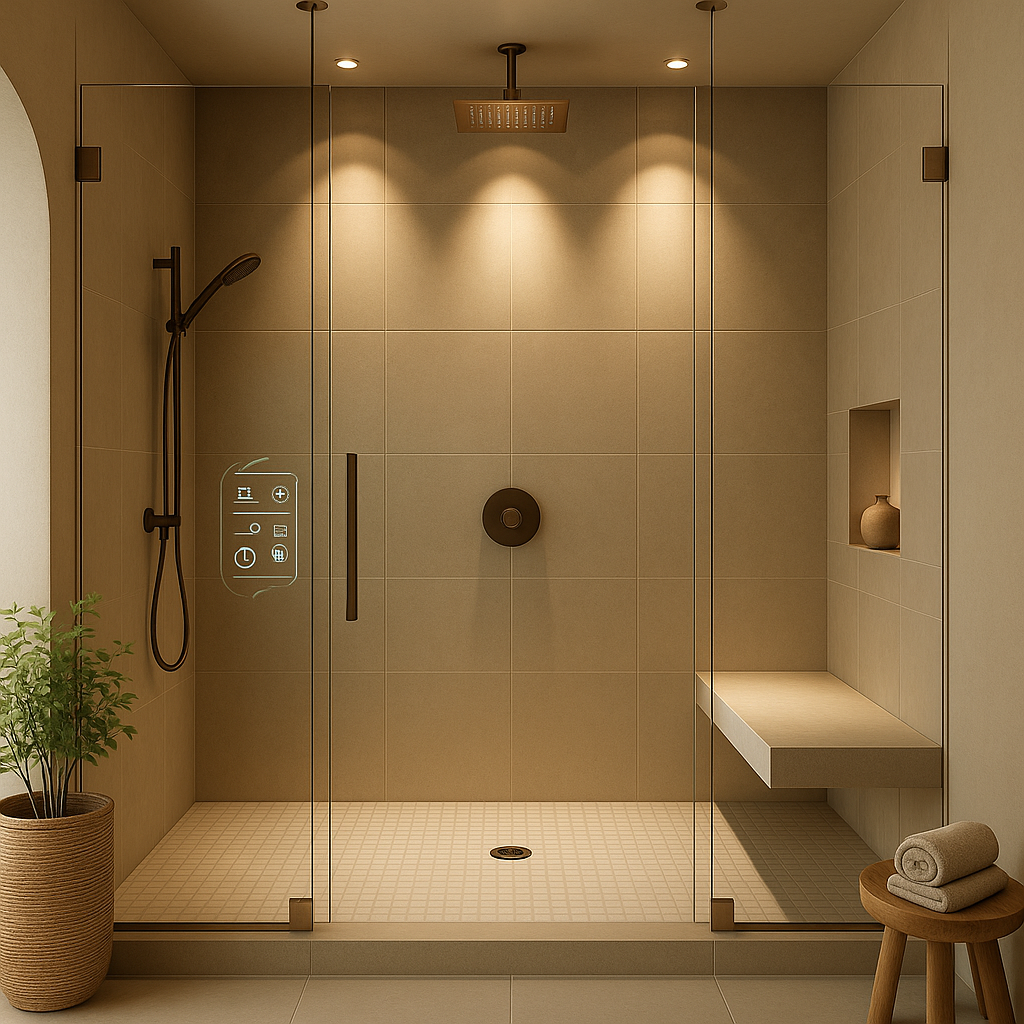
Control placement should support the intended user position and avoid forcing an occupant into the water stream simply to operate the shower. Where seats, hand showers or adjustable slide bars are included, the complete configuration should be checked against the selected accessible shower type and project code requirements.
Systems Integration in Contemporary Commercial Restrooms
Power, controls and maintenance access
Touch-free fixtures introduce electrical and service requirements that should be coordinated during design rather than after counters, walls and plumbing have been installed. Depending on the selected model, a sensor faucet may include a sensor, controller, solenoid valve, transformer, adapter, battery pack, mixing device and associated wiring or hoses.
Hardwired systems can reduce routine battery replacement where power is available, while battery-compatible equipment can be useful where electrical modifications are difficult. The appropriate strategy depends on the selected product, building conditions, maintenance model and project requirements.
Water management and serviceability
Accessible shutoffs, strainers, mixing devices and service panels can make commissioning and troubleshooting more practical. Where a building incorporates water monitoring or submetering, these systems should complement rather than replace direct access to basic plumbing components.
Accessibility Planning for Existing Restroom Renovations
Existing-building renovations introduce constraints that may not occur in new construction. Plumbing rough-ins, structural walls, floor penetrations, door positions, existing partitions, limited electrical access and finished stone counters can restrict the range of practical fixture solutions. For that reason, an accessibility-focused restroom retrofit should begin with an accurate field survey.
The survey should document actual finished dimensions rather than relying only on legacy drawings. Important conditions include doorway width and maneuvering area, floor elevation changes, fixture centerlines, counter height and depth, plumbing locations, available knee and toe space, wall construction, accessory locations and the position of shutoffs and service panels.
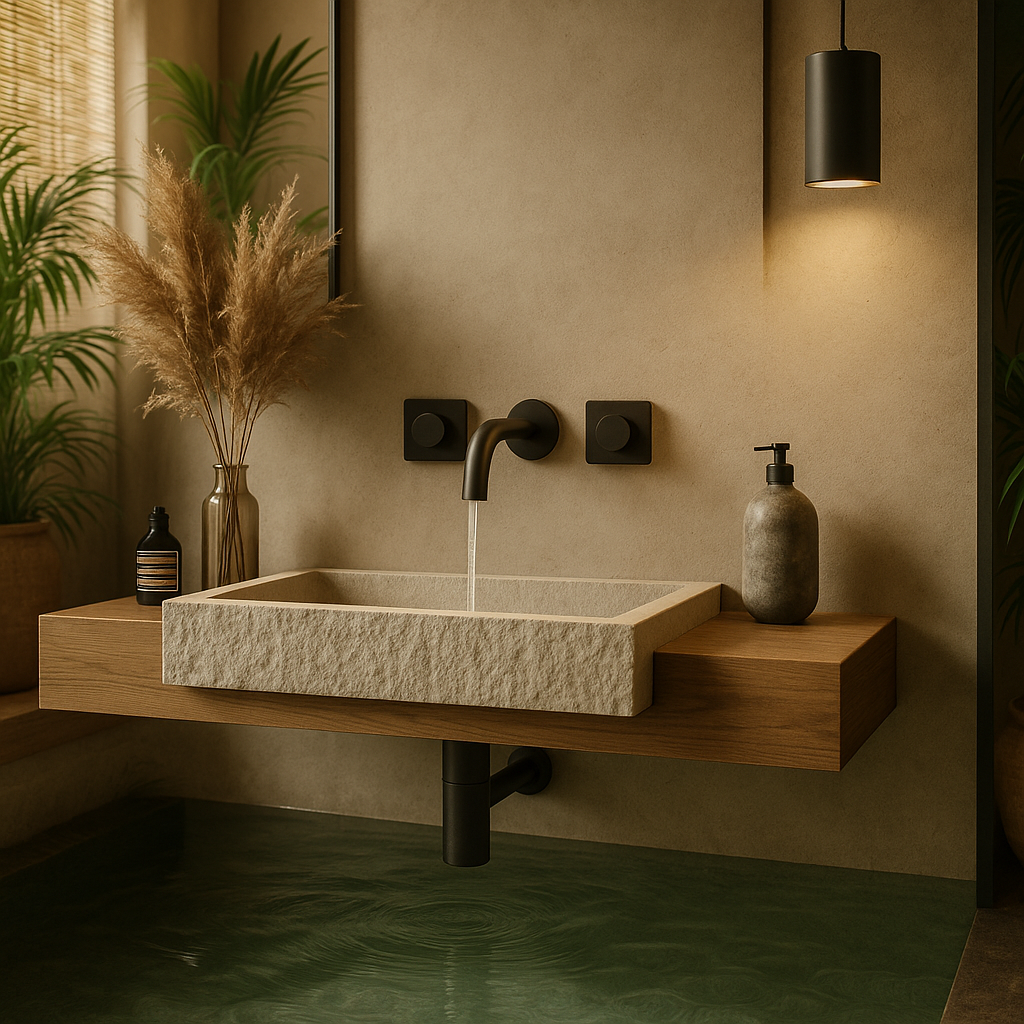
When touchless equipment is introduced into an existing restroom, power routing and service access become additional coordination issues. A replacement faucet that fits the existing deck opening may still conflict with the basin, backsplash, mirror, under-counter equipment or accessible clearance. The retrofit should therefore be evaluated as a complete wash-station assembly rather than a fixture substitution.
Where the same renovation detail will be repeated throughout a school, hotel, airport, office building or institutional campus, completing one mockup before full procurement can expose conflicts early. The mockup can be used to verify reach, sensing, splash, water temperature, soap location, drying access, maintenance clearances and cleaning procedures.
Inclusive Design in High-Traffic Public Restrooms
Airports, stadiums, arenas, universities, transit facilities and other high-occupancy buildings place additional demands on accessible restroom design. The room must remain usable not only under ideal conditions but also during peak traffic, cleaning operations and partial fixture outages.
Circulation paths should remain obvious when queues develop. Handwashing zones should not force users to cross incoming traffic, and waste receptacles or maintenance carts should not reduce the space needed for accessible movement. Repeating fixture families and consistent control locations can also make the room easier to understand for occupants while simplifying maintenance for facility teams.

Serviceability is particularly important in these environments. A failed sensor, blocked aerator, depleted battery or inaccessible shutoff can remove a fixture from service even when the rest of the assembly remains functional. Accessible restroom planning therefore benefits from a lifecycle perspective that considers how quickly equipment can be inspected, isolated, repaired and returned to use.
Commissioning Accessible Restroom Fixtures Before Turnover
Accessibility should be checked after construction, not only on drawings. Counters, partitions, floor finishes, mirrors, dispensers and equipment installed during later trades can alter the usable conditions originally shown in the design documents.
A closeout review should confirm that required clearances remain unobstructed, controls are reachable, grab bars and accessories are installed in their coordinated locations, exposed plumbing is addressed where required, and touchless equipment operates from the intended user position.
Commissioning is especially valuable when the same fixture detail is repeated across multiple restroom banks. Correcting one mounting, sensor or basin-coordination problem in a mockup is generally more efficient than correcting the same condition throughout a completed building.
Accessible Restroom Specification Checklist for AEC Teams
Construction documents should identify the accessibility standards and adopted codes applicable to the project, coordinate plumbing and architectural dimensions, and require submittals that show how the selected fixture interfaces with the surrounding construction.
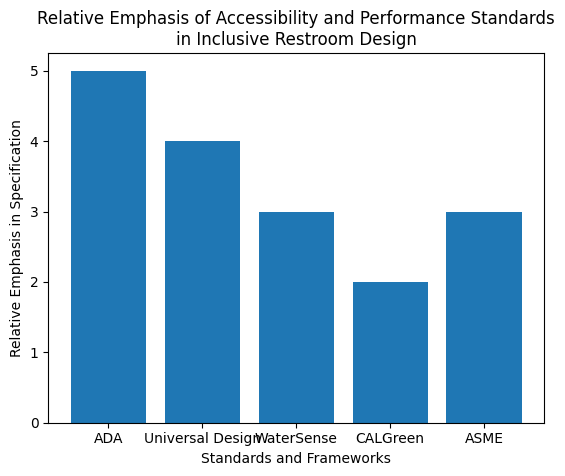
Fixture Coordination Summary for Accessible Restroom Design
| Fixture or Element | Accessibility Coordination | Durability / Operations | Water / Resource Consideration | Documentation Focus |
|---|---|---|---|---|
| Water Closet | Clear floor space, transfer relationship, control location and compartment geometry. | Carrier, anchorage, service access, cleaning and high-use durability. | Confirm applicable flush-volume and performance criteria. | Plan, elevations, plumbing rough-in and product submittal. |
| Flush Control | Reach, operability and intuitive activation. | Cycle frequency, serviceability and tamper resistance. | Coordinate flush performance with the selected fixture. | Control location and service information. |
| Grab Bars | Required mounting position and usable gripping surface. | Structural backing and secure anchorage. | Not typically a direct water-use component. | Interior elevations and wall backing details. |
| Lavatory | Approach, counter/lavatory height, knee and toe clearance and pipe conditions. | Cleanability and resistance to high-frequency use. | Coordinate with faucet flow and basin performance. | Plan, section and under-counter coordination. |
| Faucet | Reach, operability, sensor activation and water-stream position. | Serviceable valve, sensor, aerator and power components. | Specify appropriate flow performance. | Product data, power diagram and basin coordination. |
| Soap Dispenser | Reachable from the handwashing position without obstructing clearance. | Refill access, pump service and cleaning compatibility. | Coordinate refill system and waste reduction objectives. | Interior elevation and refill/service details. |
| Hand Dryer / Towel | Reach, projection and clear-floor-space coordination. | Service access, noise and replacement strategy. | Electrical or consumable-resource implications. | Electrical coordination and accessory elevation. |
| Mirrors and Accessories | Mounting height, projection, visibility and reach. | Secure anchorage and cleaning resistance. | Generally indirect. | Coordinated restroom interior elevations. |
| Sensor / Power Components | Must not reduce required user clearances. | Keep controls, batteries, transformers and solenoids accessible. | Automatic shutoff can support controlled use. | Electrical and plumbing coordination details. |
| Partitions and Doors | Circulation, maneuvering and compartment use. | Hardware durability and anchorage. | Indirect. | Plans, elevations and hardware schedules. |
Accessible Restroom Systems: Coordination, Compliance and Operational Performance
Accessible restroom design requires a systems approach that integrates architectural accessibility, plumbing performance and real-world usability. Water closets, lavatories, faucets, soap dispensers, dryers and accessories must be positioned within coordinated approach and reach zones while maintaining a practical room configuration for users with different mobility and dexterity needs.
From a specification perspective, compliance extends beyond dimensional requirements. Fixtures also need to remain functional through repeated use, cleaning and routine servicing. Sensor-operated equipment should activate consistently, while replaceable components should remain accessible to technicians without requiring permanent finishes or accessible construction to be removed.

Aligning ADA and ICC accessibility requirements with water-efficiency objectives, appropriate plumbing standards, serviceability and Universal Design thinking can reduce conflicts during construction and provide a more consistent basis for long-term facility management.
Related Commercial Restroom Design Guides
These related DesignConcept123 resources extend the accessibility discussion into touchless retrofits, electrical coordination and high-traffic restroom infrastructure.
Accessible Restroom Design FAQ
What is the difference between ADA compliance and Universal Design?
Does installing a touchless faucet automatically make a lavatory ADA compliant?
Why should faucet and basin geometry be reviewed together?
Where should soap dispensers be located in an accessible restroom?
Why is maintenance access relevant to accessible restroom design?
Should accessibility be checked after the restroom is constructed?
Accessible & Inclusive Restroom Design Reference Library
Accessibility standards, Universal Design organizations, building-code authorities, plumbing references, sustainability resources and facility-management organizations useful for professional restroom planning and specification.
Closing Design Perspective
Successful accessible and inclusive restroom design occurs when fixture specification, circulation, plumbing, controls, accessories and maintenance are treated as parts of one coordinated system. ADA compliance provides an essential regulatory framework, while Universal Design can help project teams examine usability beyond minimum requirements.
For architects and engineers, the most reliable process is to coordinate dimensions early, document fixture and accessory relationships clearly, verify product-specific requirements, provide service access, and commission the completed restroom after installation. This approach supports accessibility while also addressing durability, water management, maintainability and long-term operational performance.