By 2026, material and finish choices for commercial bathroom hardware are no longer purely aesthetic decisions. For airports, higher-education campuses, healthcare facilities, stadiums, and transit hubs, finish selection affects:
- Resistance to heavy footfall and intensive cleaning
- Meets ADA, WaterSense, CALGreen, and ASME requirements
- Water and energy performance over the lifetime of the building
- Integration with sensor technologies, metering, and BMS systems
- Long-term maintenance costs and resilience
This article takes an engineering and specification-focused look at the dominant material and finish trends—particularly matte black and brushed brass—and how they intersect with codes, standards, and performance requirements for 2026.
Regulatory and Standards Framework
ADA: Reach, Operation, and Clearances
The Americans with Disabilities Act (ADA) and its 2010 Standards for Accessible Design define reach ranges, clear floor space, force-to-operate controls, and mounting heights for lavatories, controls, and dispensers in commercial facilities.
Reference:
- ADA Design Standards
Engineering considerations:
- Projection and edge profile: Lever handles, sensor windows, and trim details must not create hazards.
- Tactile feedback and contrast: Matte and brushed finishes help reduce glare and increase detectability.
- Stability over time: Corrosion or finish failure can compromise clearances or operability.
WaterSense: Flow Rates and Performance
The U.S. EPA WaterSense program provides voluntary performance criteria widely used in commercial and institutional projects.
Overview of WaterSense commercial buildings:
- See WaterSense – Commercial Buildings
WaterSense best management practices: WaterSense at Work
- WaterSense Best Management Practices
Finish-related implications include the following.
- Preventing scale build-ups to maintain consistent flow rates.
- This makes the cleaning of aerators and sensors easy.
- Sensor precision maintenance within conditions of long-term use
CALGreen Water, Materials and Indoor Air Quality
CALGreen’s mandatory measures influence water efficiency, material life-cycle performance, and environmental quality in restrooms.
2024 CALGreen Update Summary:
- 2024 CALGreen Updates Handout
Nonresidential CALGreen overview:
- CALGreen 2022 Commercial Overview
Relevance to Finishes:
- Alignment with indoor water-use limits
- Durability, which permits expectations of long-life material.
- Compatibility with low-VOC cleaning and maintenance protocols
ASME A112.18.1: Plumbing Supply Fittings
ASME A112.18.1 (harmonized with CSA B125.1) defines performance and durability requirements for plumbing supply fittings.
Introduction of ASME plumbing supply fittings:
- ASME Plumbing Supply Fittings Overview
Extract from ASME A112.18.1:
- ASME A112.18.1 Extract (Sample)
Concluding remarks:
- Corrosion resistance
- Life-cycle test performance
- Resistance against the water chemistry and cleaning agents
Material and Finish Technologies in Commercial Hardware
Common Substrates
Commercial hardware is usually based on:
- Brass alloys for valves and faucet bodies
- 304/316 stainless steel for corrosion resistance
- Zinc diecast for cost-sensitive trim
- Aluminum for partition and accessories
Finish must be matched to substrate to avoid adhesion problems or galvanic corrosion.
Finishing Systems
Key Finishing Technologies in 2026:
- PVD coatings: high hardness, very good resistance to chemicals, color stability.
- Electroplating Proven hardness; widely available; polished or satin
- Powder Coating: Matt/low-gloss finish, wide color range, variable durability
- Brushed stainless steel: uncoated, very durable, for extreme conditions
Trend: Matte Black for High-Traffic Environment
Drivers of Matte Black
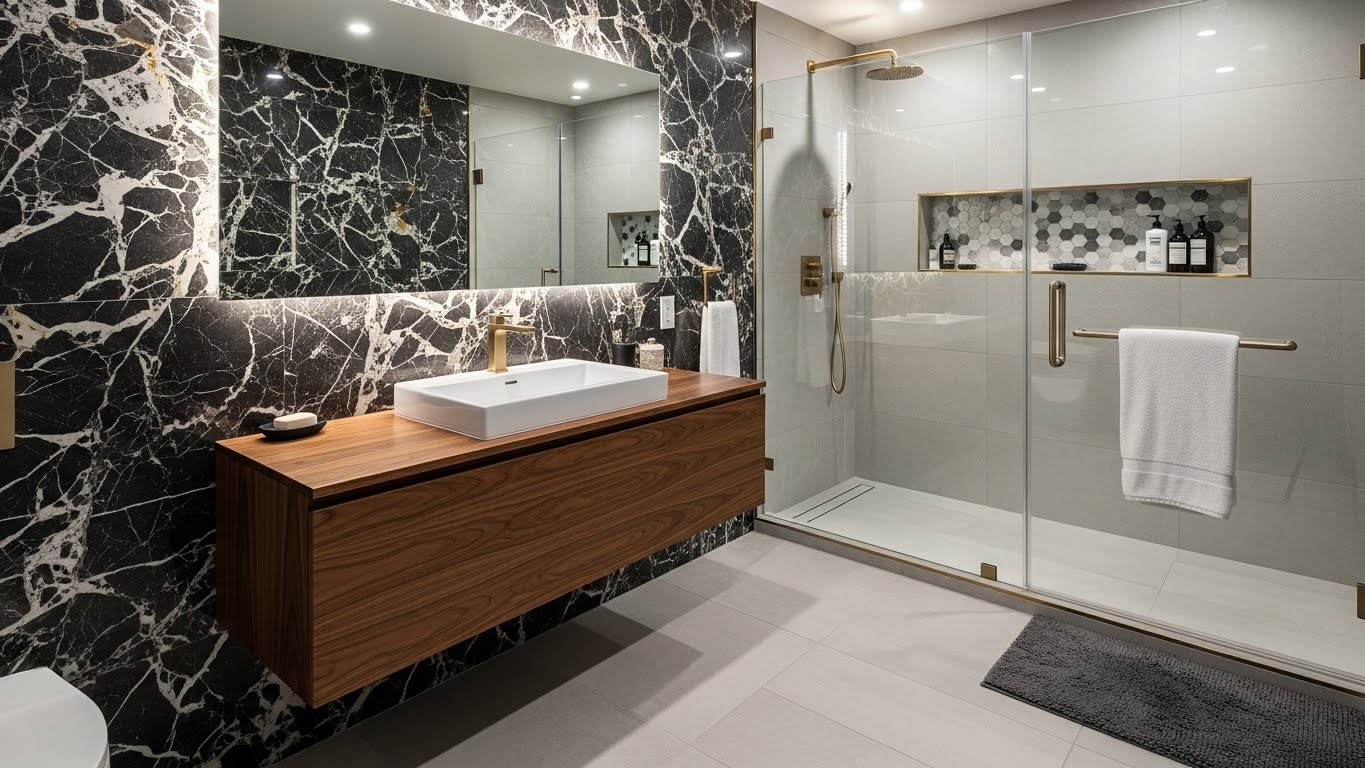
Matte black is now well established in universities, corporate workplaces, hospitality-adjacent commercial spaces, and some public buildings. Benefits include:
- Low glare under LED lighting
- Strong contrast in vision against light-colored backgrounds
- A consistency of aesthetic between fixtures and accessories
Failure Modes and Engineering Constraints
Common Issues in Commercial Restrooms
- Edge chipping around outlets
- Changes in gloss on surface by abrasive cleaning
- Rust staining when coating is breached
Specification guidance:
- For faucets and all other wetted parts, prefer PVD matte black.
- For powder coat, require architectural-grade multi-coat systems
- Chemical resistance test against facility cleaning agents
- Definition of acceptable visual wear in submittals and mock-ups
System Integration; Hardware of Sensors
Matte Black w/ Sensors Considerations
- IR sensors must be calibrated in low-reflectivity situations.
- Pure-black controls shall have contrast markings for ADA usability
- This is usually kept metallic or tinted for IR performance.
Trend: Brushed Brass and Warm Metallic Finishes
Expansion into Institutional Projects
Warm metallics-previously seen in boutique hospitality-today show up in:
- Performing arts centers
- Academic flagship buildings
- Executive workplaces
- Higher-class airport areas
Technical appeal:
- Visibility reduction of fingerprint
- Less Glare
- Visual warmth without compromising durability
Color Stability and Clear Coats
Possible risks:
- Tarnishing if the clear coat fails
- Batch-to-batch colour drift
- Complete mismatch across manufacturers
Spec Guidance:
- Prefer PVD brass-tone metallics for primary plumbing hardware
- Require chemical resistance testing of lacquered finishes
- Document patina vs color consistency expectations
Wayfinding and Zoning
Warm metallic finishes can also reinforce subtle zoning strategies:
- Featuring accessible or family restrooms
- Differentiating staff from the public sectors
- Aligning with lighting and interior-materials palette
Beyond Black and Brass: Workhorse Finishes in 2026
Most high-abuse environments continue using:
- Brushed stainless steel: transit, stadiums, detention
- Satin chrome or satin nickel provides low-maintenance neutrality.
- Hybrid systems: combining PVD metals with painted surfaces
Durability, Cleanability, and Life-Cycle Performance
Align Finishing with Cleaning Protocols
Most coating failures in service are the result of incompatible cleaning regimens.
Coordinate specifications with facility staff regarding:
- Chemical: bleach, quaternary ammonium, peroxide
- Frequency and dwell times
- Abrasive tools or automated systems
Surface selection:
- PVD finishes = excellent chemical resistance
- Powder coat/lacquer = more sensitive, requires documented compatibility
- Bare stainless = lowest risk where cleaning is unpredictable
Life Testing and Standards
Specifiers shall require:
- Proof that the specific finish, not just the underlying model, passed durability tests
- Salt-spray and abrasion testing data
- Consistent completion code between BIM & schedules
Sustainability and Embodied Impacts
Water and Energy
WaterSense-aligned fixtures ensure long-term water efficiency.
WaterSense BMPs:
- WaterSense Best Management Practices
Tools for CI facilities:
- Tools for CI Facilities
Durable finishes help maintain water performance by preventing degradation that affects flow or sensor accuracy.
Materials, CALGreen and Long-Life Hardware
Longer-lasting hardware means fewer times you have to replace it, less packaging, and less damage to the environment. CALGreen’s goals for conservation are in line with PVD metallics and stainless steel.
Indoor Environmental Quality
Finish-related IEQ considerations include:
- Low-VOC coatings where applicable
- Resistance to mold-control cleaning chemistry
- Smooth, nonporous surfaces that will not harbor contaminants
System Integration: Hardware, Sensors, and BMS
Sensor Faucets and Flush Valves
Finishing selection includes:
- IR sensor reflectance and calibration
- Aperture clarity
- Long-term stability at sensor windows
BMS and Water Management Platforms
Integrated systems require:
- Trim designs that protect electronics from chemical exposure
- Gaskets and seals compatible with cleaners and disinfectants
- Replaceable cartridges or solenoids accessible without damaging finishes
2026 Project Specification Checklist
Codes and Standards
- ADA design standards: ADA Design Standards
- EPA WaterSense for commercial buildings: WaterSense – Commercial Buildings
- CALGreen updates: 2024 CALGreen Updates Handout
- Overview of ASME A112.18.1: ASME A112.18.1 Overview
Material and Finish Selection
- Match substrate with environment
- Require PVD for matte black where possible.
- Specify PVD warm metallics for high-use areas
- Use stainless or satin metallics in high-abuse environments
Durability and Maintenance
- Coordinate specification with cleaning regimens
- Require chemical resistance and life-cycle test data
- Plan to achieve finish consistency across anticipated replacements
System Integration Compatibility
- Check with sensors and reflectivity needs
- Ensure maintenance access without finish damage
- Coordinate with controls engineers for BMS-integrated restrooms
Conclusion
In 2026, matte black and brushed brass represent two ends of a broader shift toward performance-driven finish selection. Material and finish decisions now intersect directly with:
- ADA compliance
- WaterSense performance
- CALGreen and sustainability goals
- ASME durability test
- Sensor integration and long-term operability
For architects and engineers, finishes are no longer decorative features—they are integral technical components that influence maintenance, sustainability, accessibility, and long-term building performance.
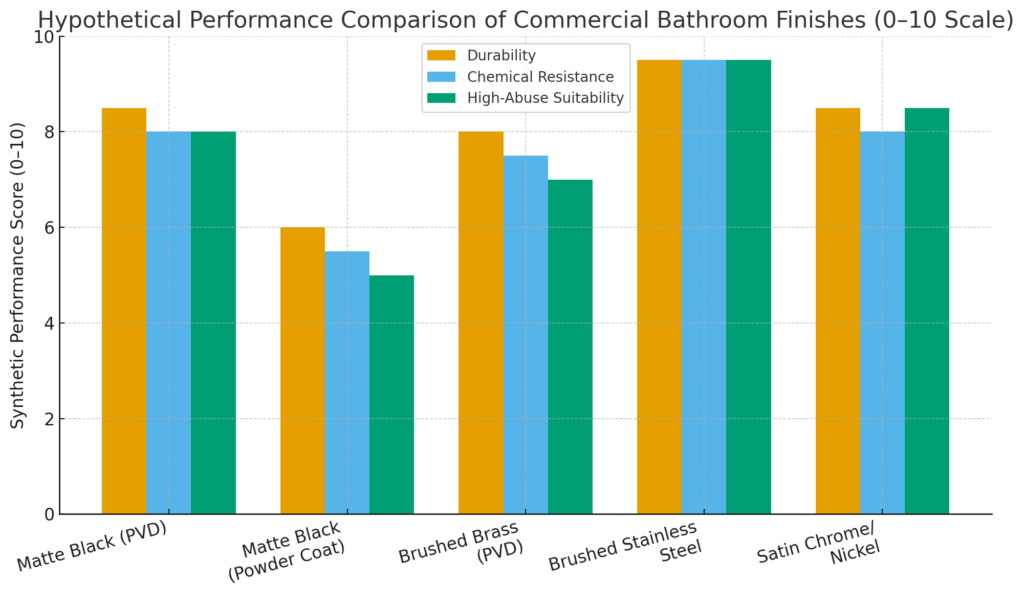
| Finish | Durability | Chemical Resistance | High-Abuse Suitability | Notes (Qualitative, from article) |
|---|---|---|---|---|
| Matte Black (PVD) | 8.5 | 8.0 | 8.0 | Robust if PVD-coated; suitable for many commercial applications when cleaning agents are vetted. |
| Matte Black (Powder Coat) | 6.0 | 5.5 | 5.0 | More vulnerable to chipping and chemical damage; needs architectural-grade systems and testing. |
| Brushed Brass (PVD) | 8.0 | 7.5 | 7.0 | Warm metallic aesthetic with good durability; color stability depends on PVD system quality. |
| Brushed Stainless Steel | 9.5 | 9.5 | 9.5 | Workhorse finish for harsh, high-traffic, and vandal-prone environments; no coating to fail. |
| Satin Chrome / Satin Nickel | 8.5 | 8.0 | 8.5 | Neutral, low-maintenance finish with a long track record in commercial and institutional projects. |
-
ada.gov
ADA Design StandardsAccessibility standards defining reach ranges, clearances, and operability requirements. -
epa.gov
WaterSense – Commercial BuildingsPerformance criteria and guidance for water efficiency in commercial facilities. -
WaterSense Best Management PracticesBest practices to maintain water performance and improve operational efficiency.
-
Tools for CI FacilitiesTools and planning resources for commercial and institutional water efficiency programs.
-
dgs.ca.gov
2024 CALGreen Updates HandoutSummary of CALGreen updates impacting water, materials, and IEQ measures. -
santaclarita.gov
CALGreen 2022 Commercial OverviewCommercial CALGreen overview document with nonresidential references. -
asme.org
ASME Plumbing Supply Fittings OverviewPerformance and durability overview for ASME A112.18.1 plumbing fittings. -
normsplash.com
ASME A112.18.1 Extract (Sample)Sample extract used as reference for A112.18.1 content structure.