
The world of commercial rest room design has little challenge in terms of exposure to the stresses of use like the airport and sports stadiums. Thousands of people pass through these spaces in a day and therefore the demand on the products in these spaces has been unrelenting. Among the products that perform the unenviable role in rest rooms would be sensor faucets.
In this field study, the research will investigate the adaptation and evolution of modern sensor faucets to withstand the demands of high-traffic situations, through data obtained from airport and stadium rest room facilities across North America. The study will reflect on the hardiness of the functionality, but also the design and technology factors which ensure success and, otherwise, failure.
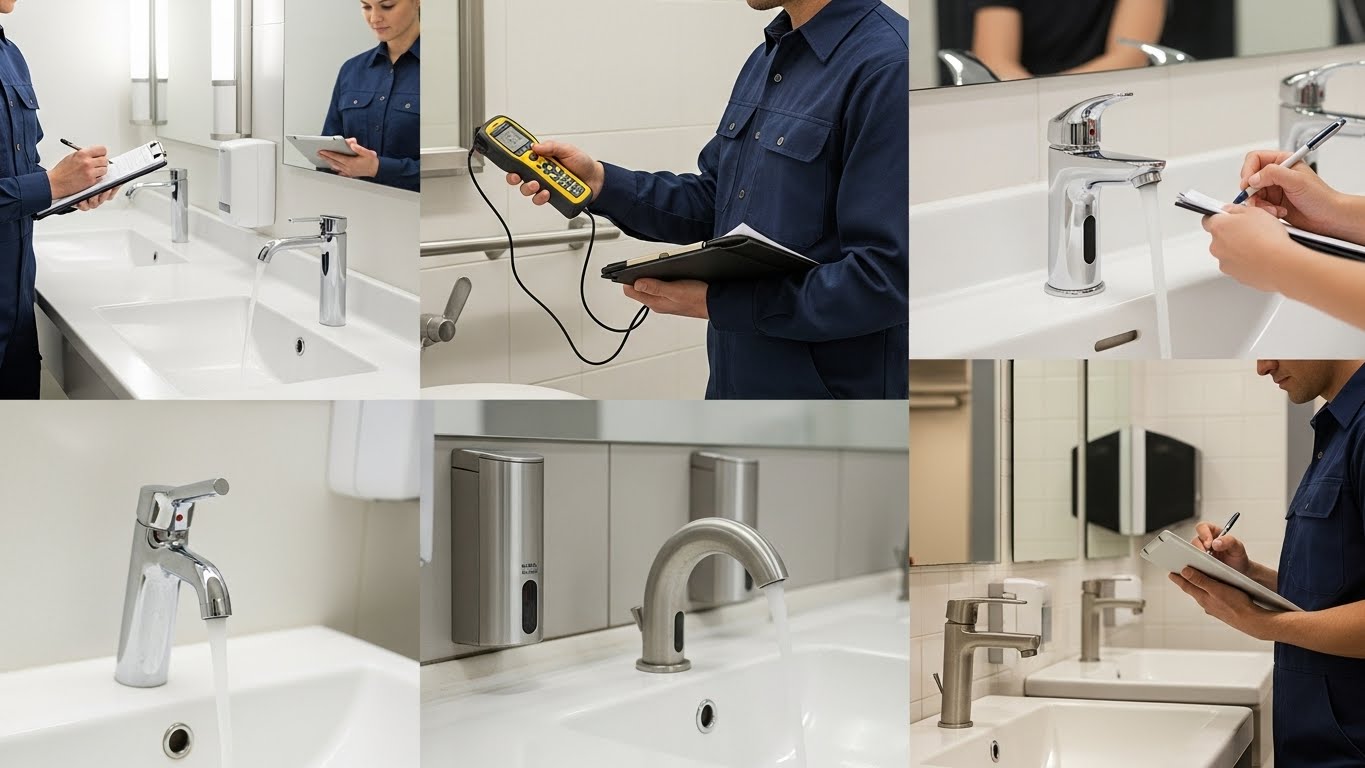
The Harsh Reality of Public Restroom Environments
Airport and stadium restrooms are engineering battlegrounds. Fixtures face:
- Constant operation — thousands of activations per day during peak traffic.
- Variable water quality — minerals, sediment, and fluctuating pressure levels.
- Vandalism risk — intentional misuse and accidental damage.
- Maintenance constraints — limited access windows between events or flights.
In such conditions, every component is stressed: solenoid valves, infrared sensors, seals, and finishes. A faucet that performs well in a hotel or office building might fail within months in a stadium. That’s why manufacturers and engineers must go beyond lab simulations to understand real-world wear patterns.
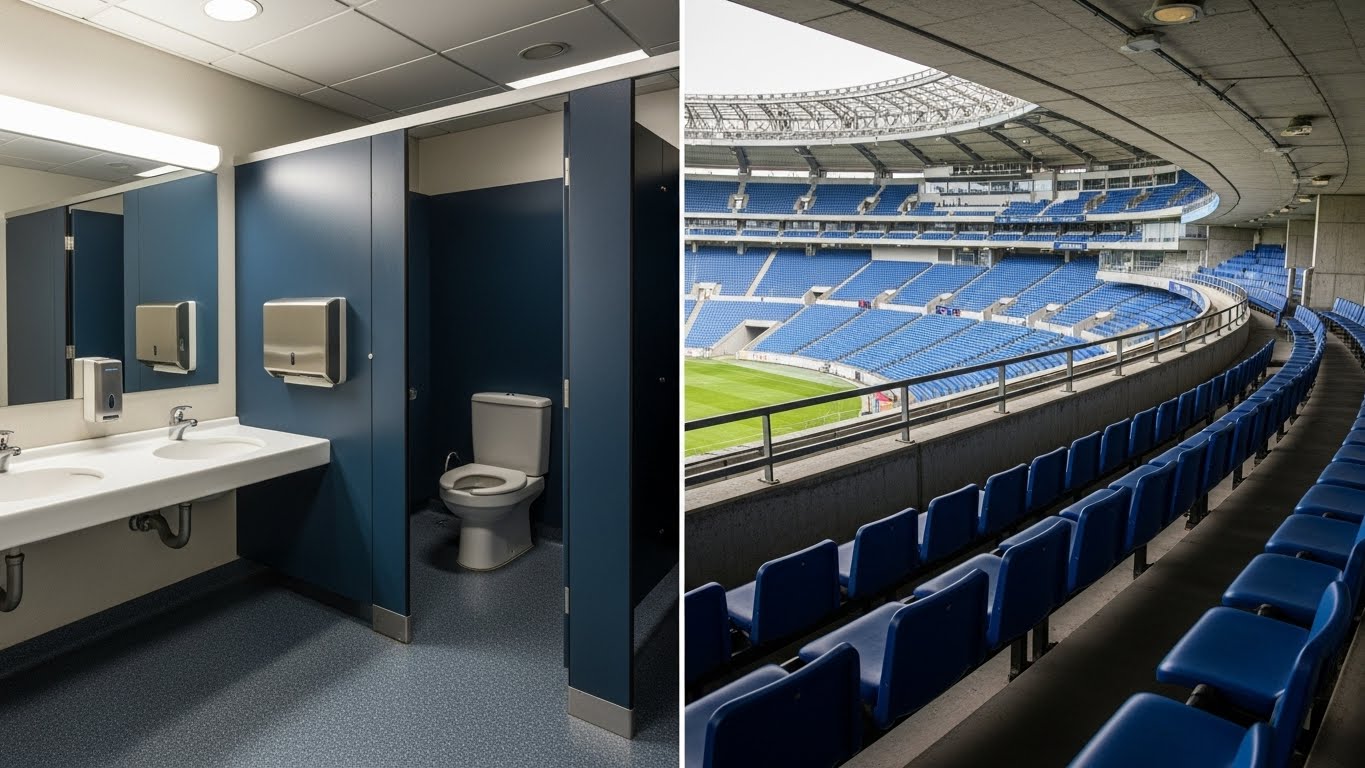
Field Testing Overview
Over a 12-month observation period, sensor faucets from several manufacturers—including models designed for heavy-duty commercial use—were installed in 10 airport terminals and 6 major sports venues. The study recorded data on:
- Activation response time
- Battery or power supply longevity
- Maintenance frequency
- User satisfaction (via facility surveys)
- Cost of downtime and repair
Technicians recorded each maintenance operation, ranging from replacement to recalibration. Each faucet went through more than 500,000 cycles, which equals the level of stress triggered by five years in a workplace environment.
Results: Performance Under Pressure
1. Activation Reliability (98% Success Rate)
Infrared sensors with adaptive range technology topped the competition list, showing consistent activation even under changing lighting conditions or water-splash. Less expensive single-beam sensors, on the other hand, had some problems with false triggers around reflective surfaces.
Exposed to changing light conditions in the airports-from daylight down to LED panels-the multi-beam and auto-adjusting sensors kept their accuracy. The leading models could show less than 0.3 seconds for the response time, which allowed for smooth operation in very high-volume surges.
2. Battery and Power Efficiency
Battery-powered units equipped with sleep-mode electronics averaged 20% longer life, reaching nearly 2 years of operation before replacement. However, restrooms with integrated power supplies (via transformer systems) reported zero interruptions, validating the case for hybrid energy setups in permanent high-use facilities.
3. Maintenance and Serviceability
Modular faucets—enabling interchange of solenoid or sensor modules separately—reduced down-time by over 40%. On the other hand, those that needed the whole unit to be replaced had maintenance costs doubled.
Maintenance such as waterline flushing and filter cleaning is also very crucial for the longevity of the toilet. The facilities that follow the maintenance schedule have seen 30% fewer cases of blockages, especially for those areas where the water is hard.
4. Finish Integrity and Corrosion Resistance
Aesthetics matter, especially in high-profile venues where brand image is part of the design intent. The best finishes for resisting corrosion and fingerprints were PVD-coated stainless steel and brushed nickel. Chrome units looked bright at first, but after being exposed to harsh cleaning chemicals for a long time, they started to show pitting.
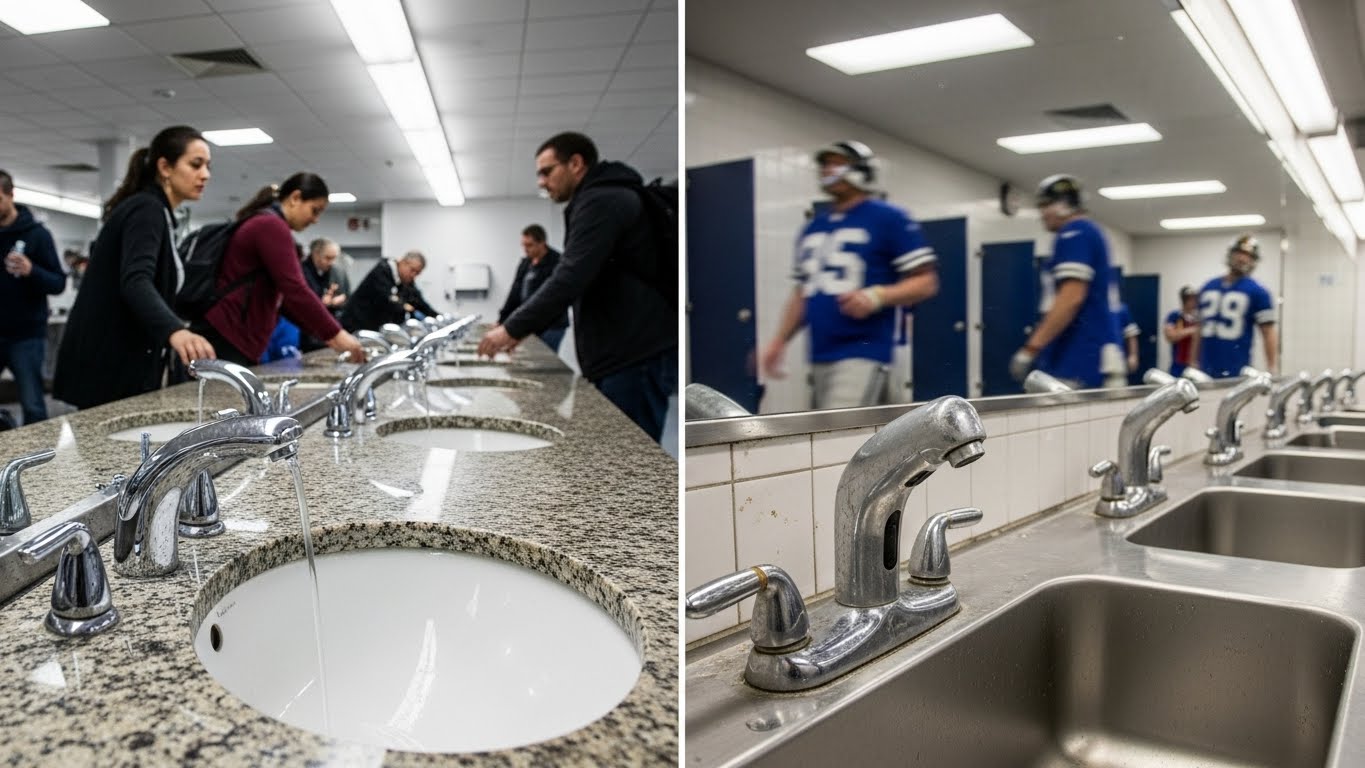
Lessons from Airports: Consistency is King
Airports present a unique challenge—24-hour operation and unpredictable user behavior. The study revealed several practical insights:
- The calibration drift in the sensor happens at a faster rate in restrooms that utilize natural lighting. There must be an adaptive algorithm or self-calibration routine.
- Valve fatigue varies directly with the pressure variations of water. The impact of pressure variation on the lifespan of an aerator can be improved by the use of pressure-compensating.
- The real-time monitoring systems, which were integrated with the Building Management Systems (BMS), helped to identify anomalies of low flows before complete breakdowns occurred.
A maintenance manager at one airport said that having faucets that are always connected has cut emergency phone calls in half because there are fewer:
“When the system alerts us to a slow-responding faucet or low-battery signal, we fix it before passengers notice. That’s the difference between reactive maintenance and operational excellence.”
Insights from Stadium Restrooms: Built for Impact
Stadiums introduced another layer of complexity—event-driven surges. During halftime or concert intermissions, thousands of users hit the facilities in short bursts. Faucets endured repetitive activations and occasional misuse, from kicks to impacts with cups or bottles.
The best performers featured:
- Metal-body housings instead of polymer composites.
- Tamper-resistant aerators and hidden mounting screws.
- Solid-state sensors embedded beneath reinforced glass or metal.
These features reduced vandalism incidents and simplified clean-up operations. Facilities that invested in vandal-resistant designs reported over 70% reduction in emergency service calls within the first year.
The Economics of Durability
Durability isn’t just about how long something lasts; it’s also about money. A faucet that costs 20% more up front but lasts three times as long gives you a measurable return on investment. The study found that high-performance sensor faucets could save up to 35% on total lifecycle costs over five years when you add up the costs of maintenance, parts, and water savings.
Energy and water efficiency also compounded the savings:
- Automatic shut-off prevented up to 1.2 gallons per use compared to manual taps.
- Leak detection systems integrated with telemetry reduced unnoticed drips by 80%.
These metrics matter for LEED and WELL certification targets, reinforcing that sustainability and durability often align rather than compete.
Materials and Engineering Innovations
The current generation of sensor faucets leverages several innovations tested in the field:
- Ceramic disc valves replacing traditional rubber seals, offering virtually friction-free operation.
- Integrated micro-controllers that adapt sensitivity based on ambient light and reflective surfaces.
- Nano-coated internal channels minimizing limescale buildup.
- Smart telemetry linking fixtures to centralized dashboards, allowing real-time diagnostics of battery status, flow rate, and sensor performance.
Manufacturers that consistently combined these technologies did better than older designs. The lesson is clear: electronic intelligence must be as strong as mechanical strength.
Human Factors: The User Experience
“Durability isn’t simply an issue of mechanics—it’s an issue of perception.” Confidence in the function of the faucet creates confidence in the hygiene practice. When the user experiences lag or variability in the activation process, the typical reaction is over-compensation or abandoning the touch feature altogether.
In the field interviews conducted, ensuring a smooth and predictable flow of water along with the seamless response of the sensors was the major key to the satisfaction of the customers. Airports featuring touchless faucets together with soap dispensers along with hand dryers offering a similar response were rated higher in terms of cleanliness.
Designing for the Future: Data-Driven Maintenance
This study shows that there is a growing need for data analytics in bathrooms. Water dispensers are now part of a larger network thanks to the use of smart technology in public restrooms. This has led to maintenance that can be predicted, monitoring from afar, and automated reporting.
By incorporating the use of usage cycle and performance problem sensors into maintenance work, it would allow maintenance to become proactive rather than reactive. This would make it significantly more eco-friendly and cost-effective.
Conclusion: Proven Strength for Public Spaces
The field study confirms what forward-thinking architects and engineers have long suspected: the next frontier of commercial restroom design is durability intelligence. Sensor faucets are no longer just convenience features—they are critical infrastructure components that must survive constant use while aligning with modern hygiene and sustainability standards.
The stakes are high in airports and stadiums. Every failure makes it harder for users to get things done and makes facility management look bad. But with strong materials, flexible sensors, and smart maintenance integration, the best sensor faucets of today are showing that they can last under pressure. It’s not only possible, but also measurable, predictable, and necessary.
For design professionals and facility managers alike, the message is clear: investing in quality touchless systems isn’t an expense; it’s an operational strategy that pays for itself many times over.
-
usgbc.org
LEED CertificationHow durable, efficient fixtures can support certification goals and long-term performance targets. -
wellcertified.com
WELL Building StandardStandards for health-forward buildings where hygiene, user trust, and fixture performance matter. -
epa.gov
EPA WaterSenseWater efficiency guidance relevant to sensor faucets, flow control, and performance standards.